
Building One Reputation Through Many Voices
The Thought Leadership Behind a Claims Transformation
The Situation
In 2021, American Family brought the claims operations of five companies together into one, American Family Insurance Claims Services (AFICS). For the first time since the acquisitions and merger that built the enterprise, one leader ran claims across all five: a chief claims officer who sat on the enterprise senior leadership team.
Before that, claims had no shared vision of the future, and so no shared story. Leaders who spoke at conferences showed the industry we had experts, but each told a separate story. Those talks might build a speaker's profile. They didn't build one reputation for the company, the kind that opens doors to partnerships and deals.
The new chief claims officer came in with clear objectives. He knew a transformation this big needed a clear story to match, one that kept every effort, communications included, pulling toward the same vision. He asked his leadership team to raise their thought leadership game. Then he created a role for me, on the strength of the claims transformation vision I led, that put strategy, innovation, and communications in one seat. That way the story grew with the vision instead of trailing behind it. He pointed his leaders my way. It was written into my goals: help many voices tell one consistent story, and build an industry-leading reputation that would draw partners and talent to the new company.
“My path to thought leadership was winding: a minor in communication design, a decade in product marketing, then a transformation role that needed a reputation big enough to win champions.”
— Ryann Foelker
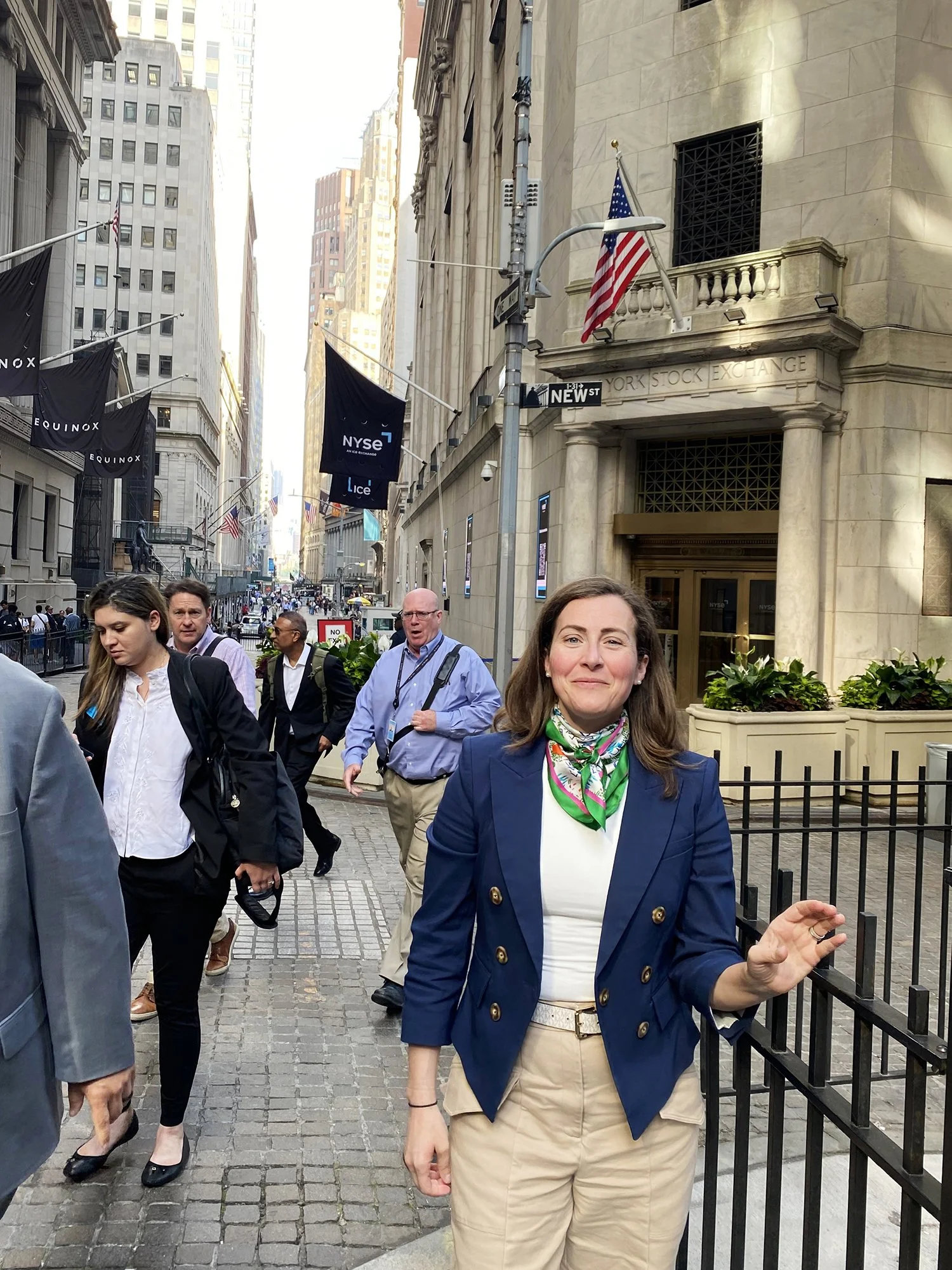
The Tension
Nobody had built thought leadership for claims at this scale. There was no playbook, no team, and no department communications to start from.
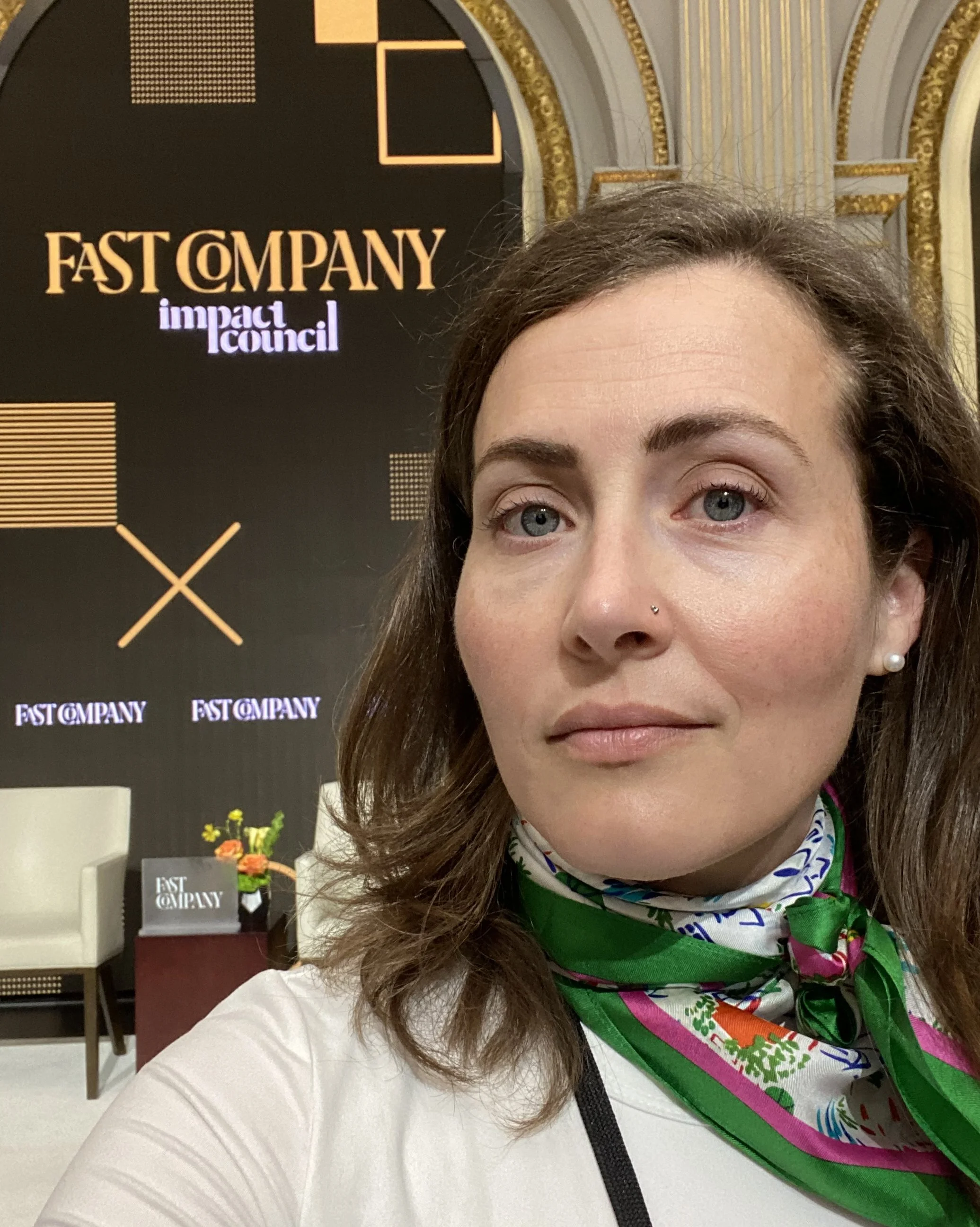
The executives on the chief claims officer's leadership team were the right voices, but as a director, I couldn't assign them anything. He could send them to me once. My work had to be good enough that they came back on their own. And the insurance trade press wanted deep insurance expertise. Three years into insurance, I didn't have the depth they were after, but the executives did, so I put them forward and saved my own voice for the design and innovation press, like Fast Company.
I didn't want them all saying the same thing. I wanted a layered story: one vision, explained through each leader's expertise, so every talk showed how their part of the work made the company's future possible.
Data science leaders told it through data, operations leaders told it through operational change, product leaders told it through builds and integrations, and I told it through emerging opportunities and co-creation.
At its heart, the story was an all-star team on a mission: support in the face of loss. I built the external strategy around three audiences: community and agent networks, through causes like inclusion and disaster response; business leaders in and beyond insurance, through new ways of working and new uses for technology; and vendor networks, through ideas and co-creation opportunities.
“Every leader told the story through their own expertise.”
— Ryann Foelker
The Work
I built a six-part process to tell one story through many voices. It worked inside the company and out at the same time, and it ran like any other operation: a steady rhythm, a tracker, and clear owners.
-
I ran internal claims communications like a news wire. I knew where the strategy was headed, what innovation work was underway, and how each executive was moving their team toward the vision. So I knew which stories to tell. And I knew what mattered to adjusters and agents, because I talked with them all the time. A former adjuster sat on my team, I reported to another, and people from the field came through Future Tuesdays, the design school I created, and my team's workshops and feedback loops. I sent stories to the editors of front-line communications across three lines of business and five brands, and they chose what to run. The same stories fed intranet posts and all-hands segments. Content followed the work, so the field always had a reason to trust it.
-
I helped the claims leadership team put their best foot forward. I pitched journalists and trade publications on their behalf, found the right stages, and nominated them for awards. I ghostwrote keynotes and all-hands remarks, wrote talking points for articles, webinars, and panels, and rehearsed and media trained them before they went on. My rewrites made leaders more relatable without losing their depth, and my visuals made complex ideas easy to follow. The work landed, so some of those leaders kept asking me to write and create content for them, even after my team moved from claims to the enterprise.
The chief claims officer gave me the same charge he gave his executives, and I didn't take it on alone. Gwen Olson, my boss and a member of the claims leadership team, became my closest partner. Our strengths fit together: she brought two decades of claims operations and a memory for the numbers that made our ideas work, and I brought the creative process that produced those ideas and a memory for the words that made them stick.
-
My team kept a tracker of every leader's stages, articles, webinars, and award entries, with the host, topic, status, and prep for each. Between 2021 and 2023 it held keynotes at Reuters Connected Claims USA, panels and webinars with Reuters and MarketForce, a Digital Insurance interview, and a run of award applications. Public examples include a Reuters webinar on claims customer experience, the Connected Claims USA 2021 recap, and a Digital Insurance leadership profile. One view showed what we'd said, where, and what came next, so no leader went on stage off message.
-
When you're leading, you're doing things that haven't been done before, and your results are often still test results. Outside signals carry the story, so any sign that the work holds up to expert judgment is worth going out to find. My team called it ABE: always be entering. We kept an award tracker, too, and scanned for new awards every two months. If we could write an entry, we did, nominating the work, the leaders behind it, and the teams that built it. I found the Fast Company opportunity and wrote American Family's 2023 entry around Future Tuesdays and Fabric, two things I originated, and the operating model my colleagues and I created. I wrote nominations for our leaders, too, including the ones that won Gwen Olson Digital Insurance's Women in Insurance Leadership award in 2023 and a place among Reuters Events' 2024 Trailblazing Women in Insurance.
-
My own team deserved the same reputation. One early hire had a background like mine in communications and video production, with strengths that complemented mine: her video skills were more recent, and where my experience leaned visual, hers leaned verbal. She edited most of our video, wrote some of the keynotes and talking points alongside me, and taught the team Canva. As the team grew, I recruited most new members from Future Tuesdays, where I could see their talent firsthand. That's how I found some of our strongest writers. I put a claims veteran from commercial farm and ranch in charge of Always Be Entering. He shadowed me as I wrote the 2023 Fast Company entry, then owned the award tracker, measured on how many awards he found, how many we entered, and how many were accepted. In 2024, he found The Digital Insurer's Insurer Innovation Award and wrote the entry that won it for PIRfy.
I also taught a recurring class on LinkedIn profiles, bios, elevator pitches, and other thought leadership basics, open to everyone in my vertical and my peers'. Not everyone wants a stage, but I got three team members onto one, along with peers and members of their teams.
-
Any case study or talking point about the vision or our approach needed executive permission the first time it went public. I built that step into how we worked, so every talk, panel, and award entry drew from stories already cleared. Award entries went through legal and communications review before they went out. By 2024, six American Family innovation case studies had been approved for public use, ready for any leader to tell.
The Results
A Seat on Fast Company's Impact Council
In 2023, American Family earned the No. 71 spot on Fast Company's Best Workplaces for Innovators. It was the only winner from the insurance category in the top 100, and the first carrier ever listed. With the listing came a spot on Fast Company's Impact Council. Our executives could publish through its thought leadership pipeline, and my boss and I each represented American Family at its annual meeting, giving the company a voice in the national conversation about innovation and impact.
A Claims Company With a Public Voice
Claims leaders went from scattered appearances to an orchestrated presence on industry stages, in webinars, and in the trade press, all telling one story about where claims was headed. Gwen and I took that story on the road: inside the company in 2022, with a claims innovation showcase for the C-suite and board, then outside it in 2023 and 2024, with four industry events and a podcast. By the end, we knew each other's fields well enough that she could take the design and innovation press, and I could take the insurance trade press. I joined the speaker faculty for Digital Insurance and Reuters Events Insurance from 2023 to 2025.
Recognition That Followed the Story
My team's entry won PIRfy the 2024 Insurer Innovation Award for the Americas, and I presented it at the global finals. Reuters Events named me one of its Trailblazing Women in Insurance in 2025. And RISE Professionals named me its inaugural Innovator of the Year in 2024, on a nomination Gwen Olson found and co-wrote with the team member who ran Always Be Entering.
Doors That Opened
After seeing me speak, Deloitte Digital pursued a collaborative partnership with my team. It led to a co-development agreement. Our stories of the future also fed partnership conversations at the enterprise level in 2022, the year American Family launched a co-innovation fund with AWS.
A Practice That Kept Going
Thought leadership stayed on my list of accountabilities through 2024, and it became how I work. Since 2020 I've given 13 keynotes, led 22 panels, workshops, and sessions, and joined 8 podcasts, on top of dozens of internal talks and workshops. Today I run my own thought leadership platform, The Burden Tax, as a working system: a signature argument, stories from real work, a steady publishing rhythm, and AI agents that gather and position my original content under editorial standards I set. In 2026, I built the same system for the leaders of a claims technology startup.
“Creative, perceptive, and always pushing forward. Ryann is extremely business driven and an engaging, exciting storyteller who makes everyone in the room feel like she's talking directly to them.”
— Ed Jennings, Program Director, Digital Insurance Connect
Raise My Own Bar
If something is worth doing, I want to do it well. Thought leadership kept paying off, so I kept investing in getting better at it. Speakeasy's three-day intensive, The Leader's Edge, taught me to channel my passionate stage presence through an executive filter. A Second City workshop taught me to trust my own fast edits: tell a two-minute story in one minute, then in 30 seconds. American Family sent me to both in 2023 through Leadership Edge, its development program for directors and AVPs on the executive track.
Those lessons paid off fast, so I kept going on my own. I invested in media coaching with Kim Rittberg, starting with her video boot camp in June 2024. Kim taught me two things: a strong hook gets attention, and plain language opens doors. In 2025, I invested in Jay Acunzo's eight-week accelerator specifically to learn his keynote structure: one perspective shift per talk, from where the audience starts to where you want them to end, with every section moving them there.
Why It Worked
We didn't treat thought leadership as a campaign. We treated it as part of the transformation.
Every story came from real work, and every leader showed how their expertise was building the vision we shared. That's how a brand-new claims company earned a reputation for innovation in its first two years.
Looking back, we built a trust layer before anyone called it that: one story, told the same way everywhere, backed by sources people recognize. Today, that's exactly what keeps AI from flattening a brand.
This case study reflects work I was proud to contribute to at American Family Insurance. It describes my own role, methods, and lessons. The outcomes named are public. All views expressed are my own. No confidential or proprietary company information is disclosed.