Building Trust and Profits: Clear Technology and Meaningful Brand Connections.
I turned declining sales numbers around with a new brand for Mediasite, the video capture product line and platform that was the main offering of the EdTech company Sonic Foundry. This drove an impressive 11% increase in revenue from Mediasite services and products, generating an additional $1.4 million in just the first year.
Following two international acquisitions, the company was bigger than ever. However, despite access to new markets, the company’s sales numbers were still declining. Customers struggled to understand the relationships between Mediasite products, services, the platform, and the parent company. This confusion led to missed sales, poor adoption, and difficulty communicating the platform’s value.
To solve this problem, I advocated for a strategic approach to branding, encouraging leaders across the company to think beyond just a slick logo. I aimed to appeal to video capture users in higher education, addressing a spectrum of people from tech-savvy to less familiar with technology. To this end, I built a brand that balanced educational content and emotional connection, effectively communicating the benefits of Sonic Foundry’s products and services while engaging both new and existing customers.


From Rebranding to Revenue Growth
By leading the design of an authentic brand that aligned with Sonic Foundry’s strategic goals, I helped their product line resonate with video capture users and decision-makers in higher education.
With clear visual and verbal product communication, the company secured contracts with well-known universities like Texas A&M and UC Berkeley, as well as partnerships with organizations like NORDUnet and UNINETT.
This resulted in impressive growth for Sonic Foundry, proving that what’s good for people is good for business.
The year after I led the rebrand, revenue from Mediasite services and products grew by 11%, reaching $14.1 million, up from $12.7 million the previous year. This resulted in a 4% revenue increase for Sonic Foundry, growing from $9.1 million to $9.5 million.


The Challenge: Confusing Brand, Confusing Products
After Sonic Foundry acquired two international companies, they changed their business model, making the Mediasite brand confusing.
Customers struggled to understand the relationships between Mediasite’s products, services, the platform, and the parent company. Those who did purchase Mediasite struggled, prompting floods of questions on how to select, assemble, and use the products and services, as well as how to promote the platform to their faculty and students.
This confusion led to missed sales and poor adoption of Sonic Foundry’s main product offering, which was particularly uncomfortable considering their goal of increasing sales in higher education.
To fix this situation, Sonic Foundry requested proposals from vendors to create a new brand for Mediasite. My design agency won the contract. My staff was junior, and since this was a complex challenge on an international scale, I took on the dual roles of creative director and lead brand designer in addition to handling the account.
-
Multiple teams inside Sonic Foundry created customer-facing content for Mediasite. When they put out a request for proposal (RFP) they were looking for a stronger visual brand to unite their content.
They wanted new visual elements, but until they read my proposal, they didn’t realize that the brand work could be scoped to measurably improve their sales and customer connections.
-
My proposal intrigued the leaders, but it did not include detailed goals for the new brand. Instead, I proposed a short “discovery” period to understand the problems and create a clear project scope.
Understanding the issues related to Mediasite meant talking to leaders, employees, and customers. I joined the Mediasite User Community to hear their questions and learn from their feedback. In less than a week, I gathered what I needed to outline a clear project scope that convinced leaders that intentional branding was a good investment.


The Work: Rebuilding the Brand
After interviewing Sonic Foundry’s customers and observing the Mediasite User Community, I realized that their biggest issue was losing the message in a tangle of words. With this in mind, I set clear goals for the new brand:
Simplify graphics and language to create clarity.
Repeat educational explanations to build product appreciation and improve technical understanding.
Use pictures, sounds, and user stories to build trust and create emotional connections.
With the updated primary logo as a foundation and these goals as a guide, I began to transform the look and feel of Mediasite to appeal to video capture users and decision-makers in higher education.
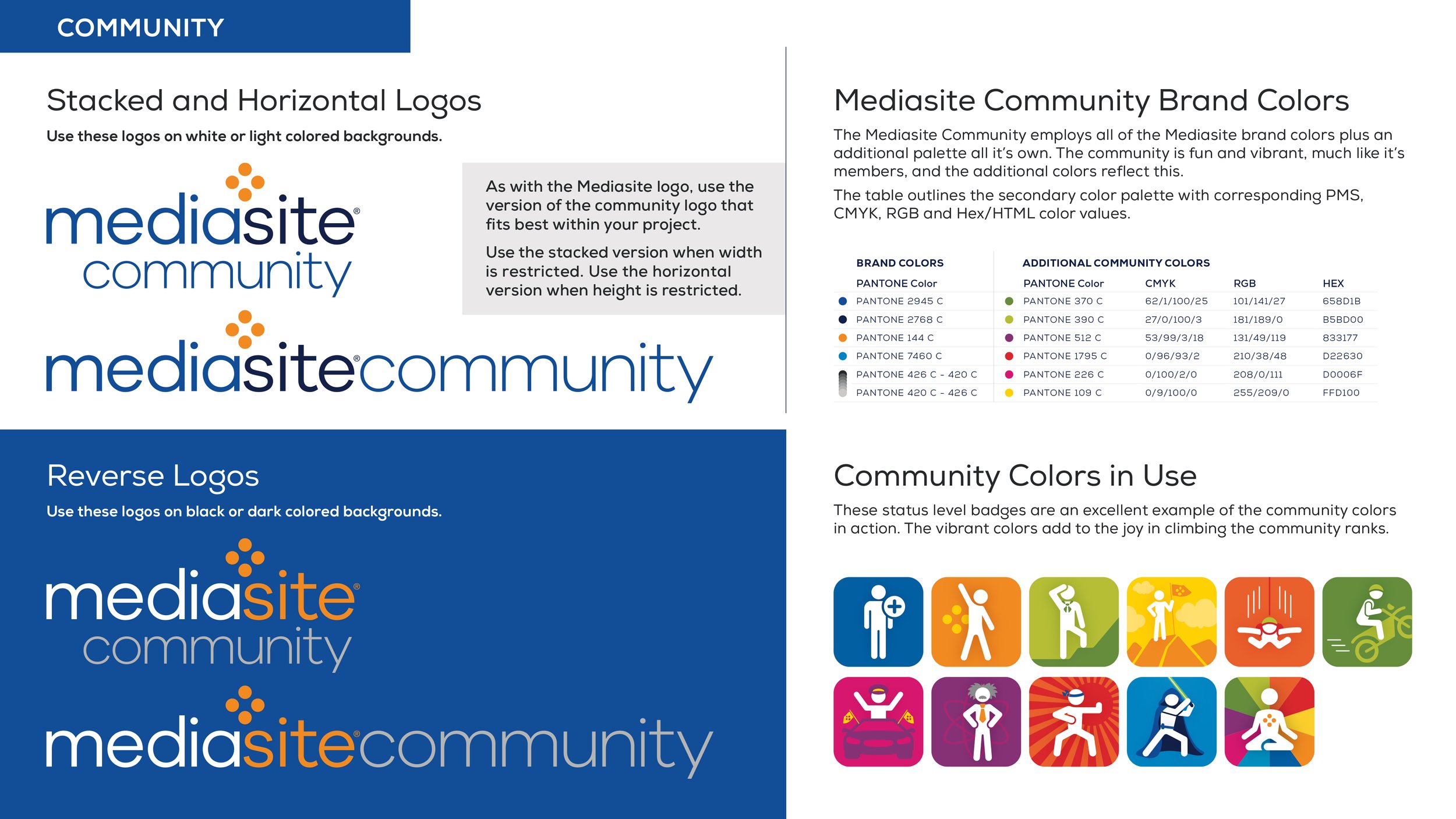
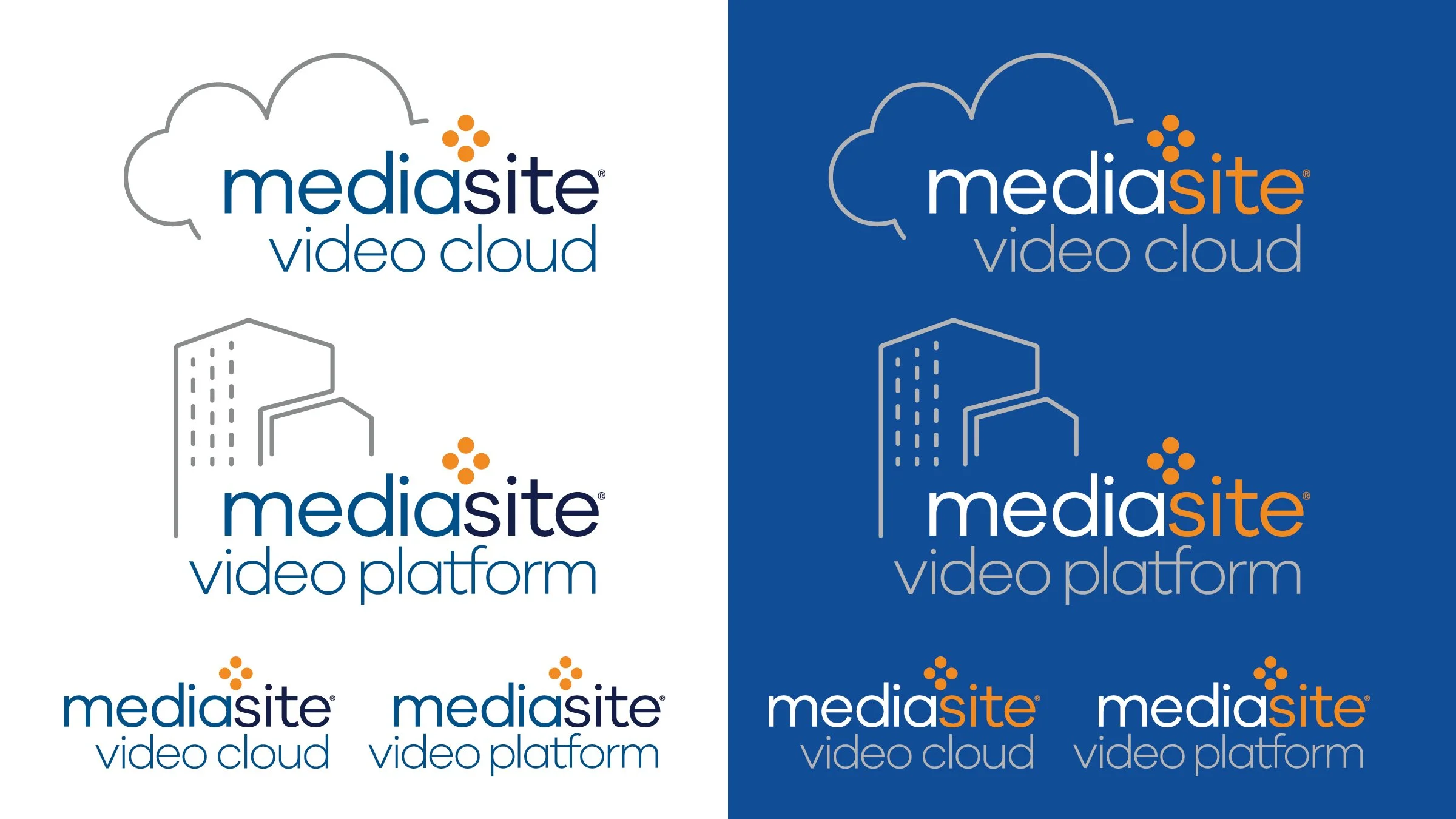
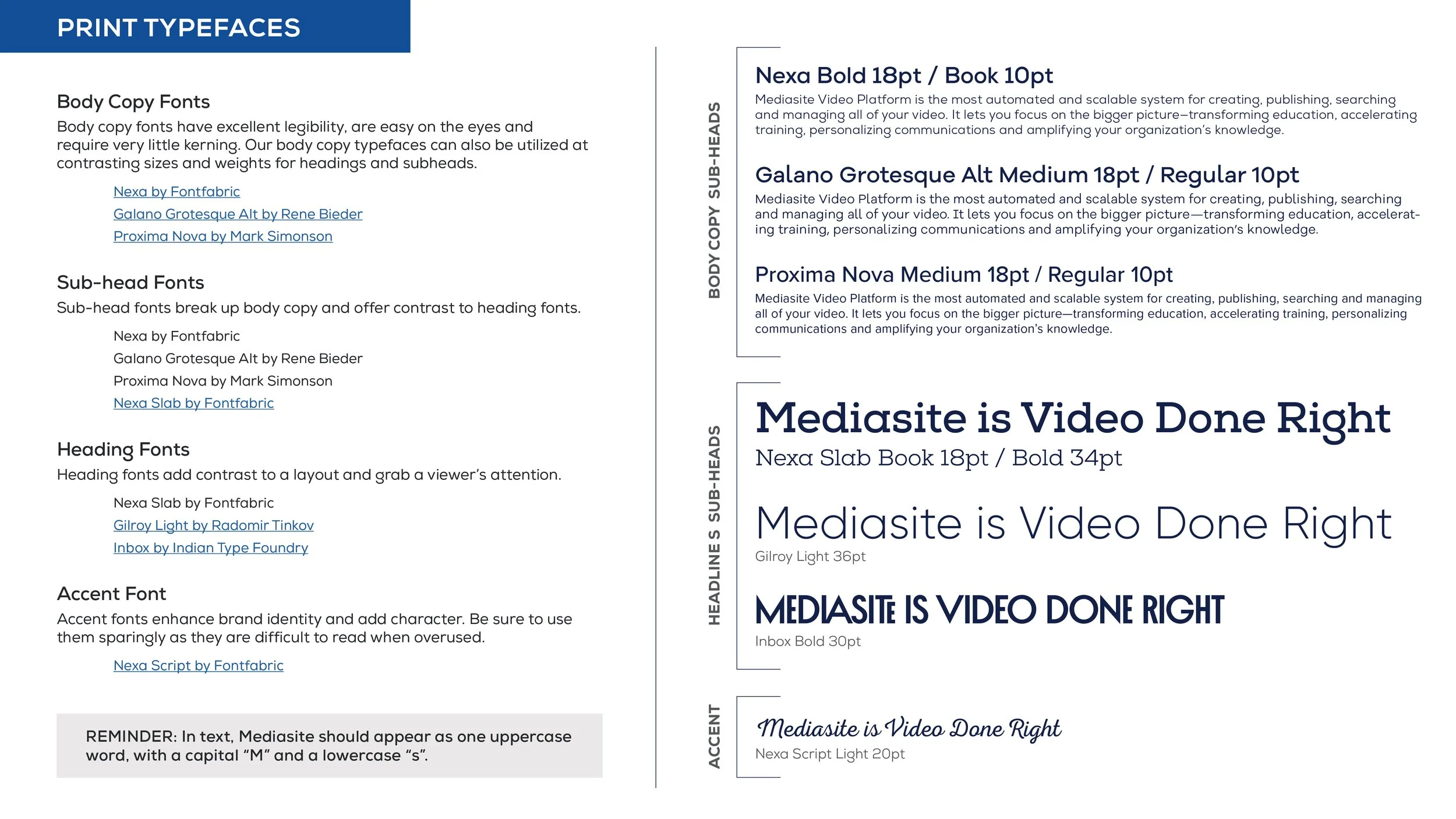
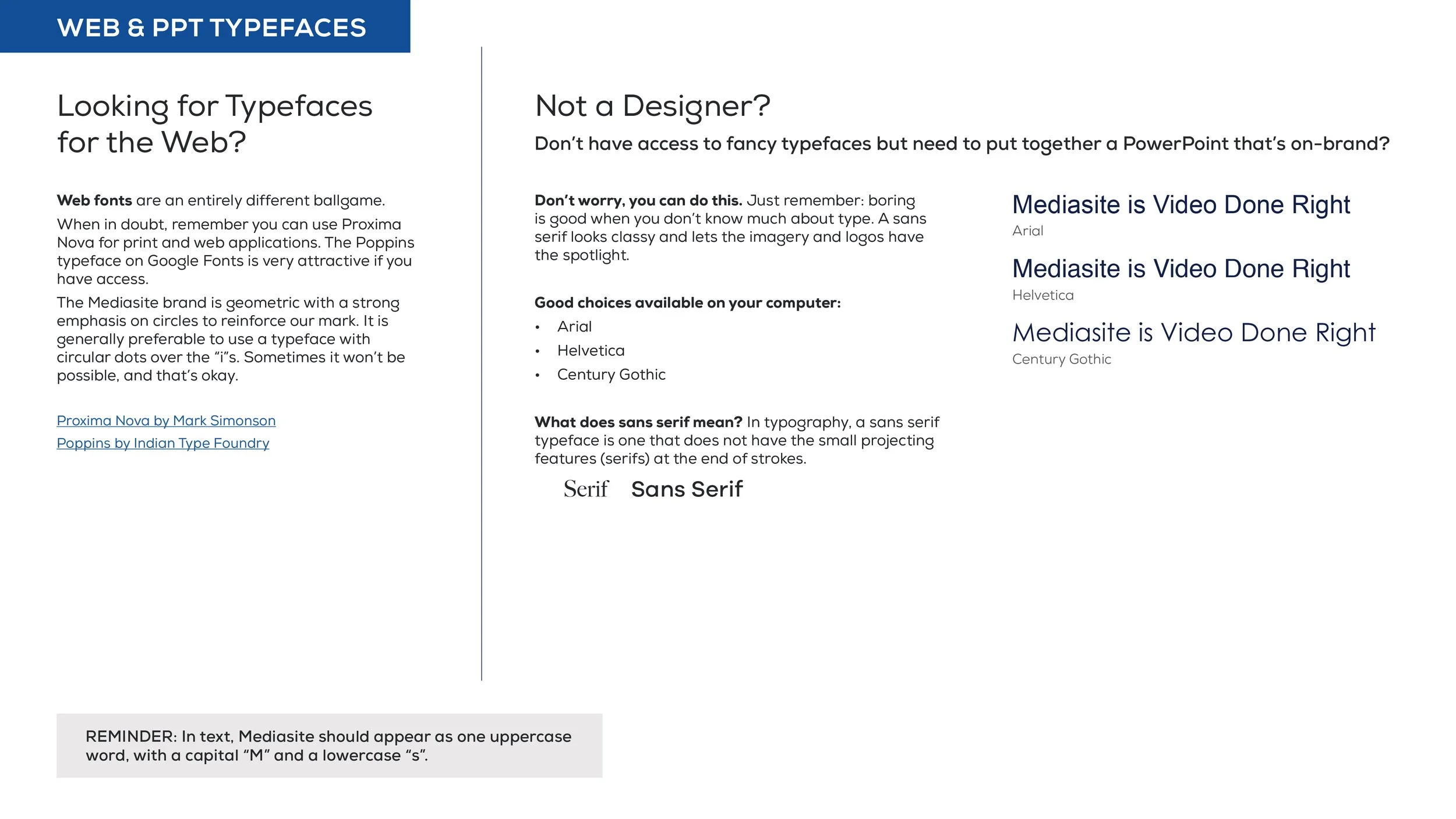
I led the creation of an identity that included product and service logos, user interfaces for the Mediasite platform and user community, and a complementary brand for Unleash, the annual Mediasite conference.
The resulting brand effectively communicated all the benefits of Sonic Foundry’s products and services, balancing education with connection to engage both new and existing customers.
-
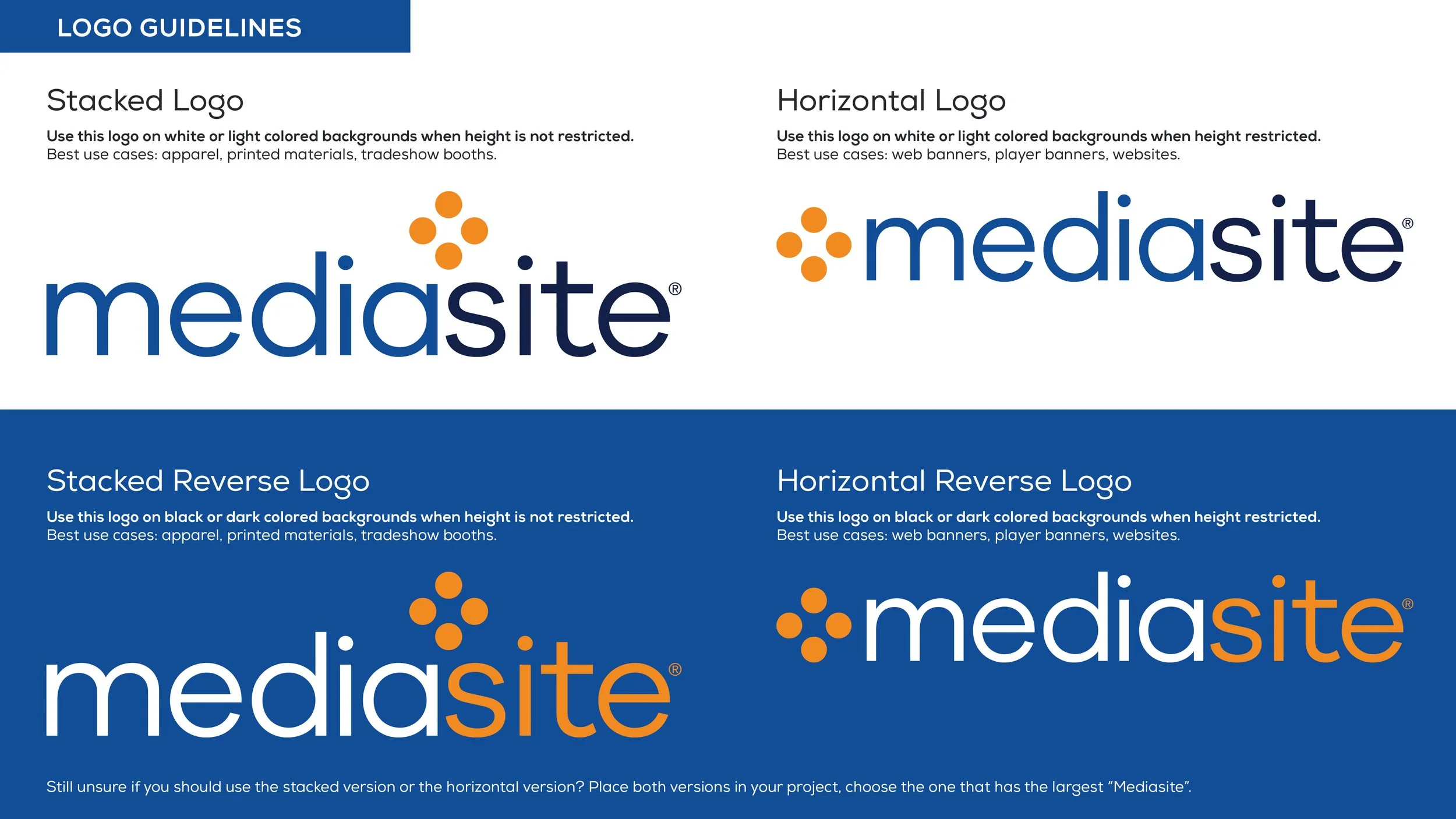
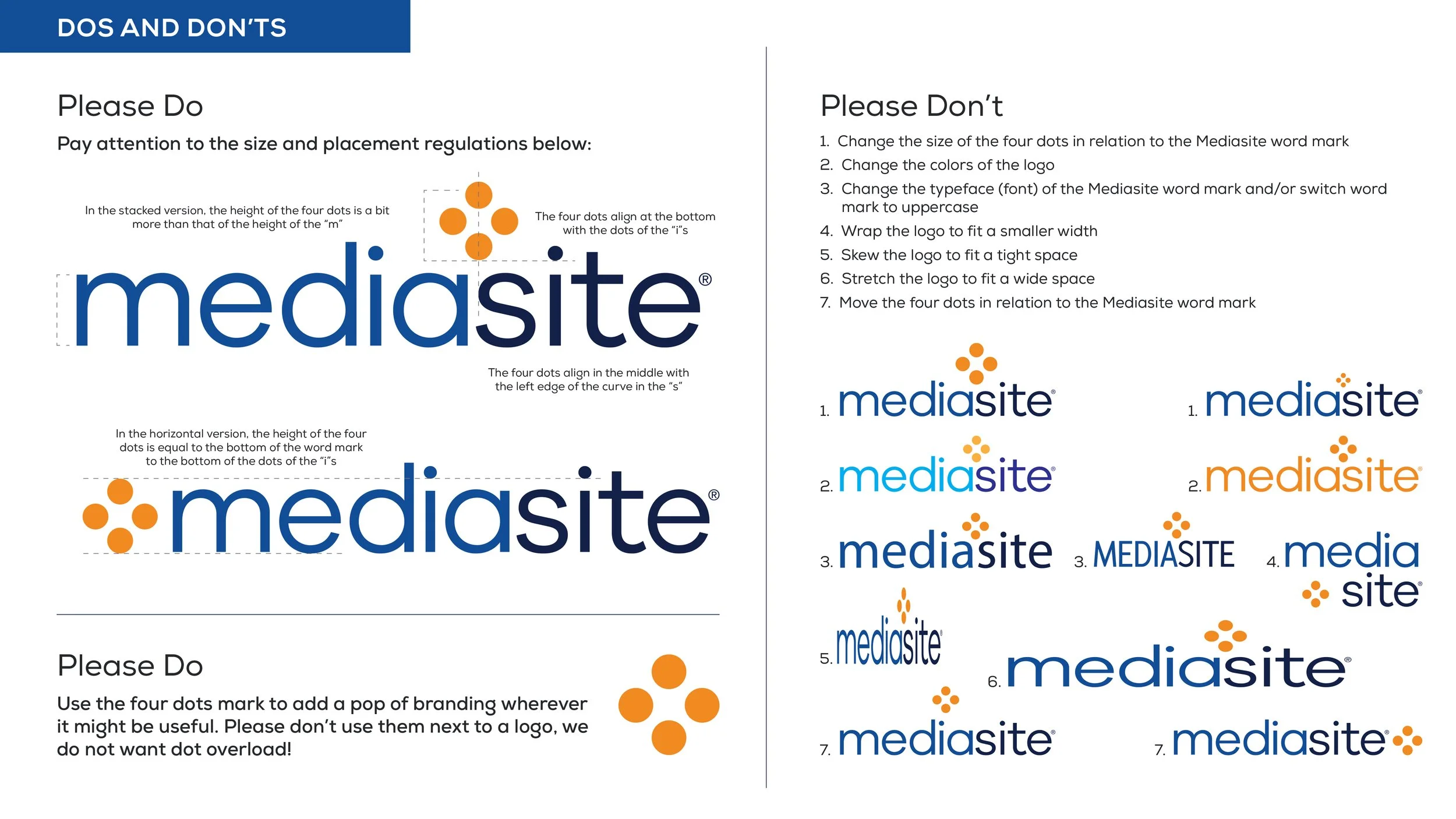
I was very intentional in the design of the primary logo for Mediasite because it was the foundation for the look and feel of the brand.
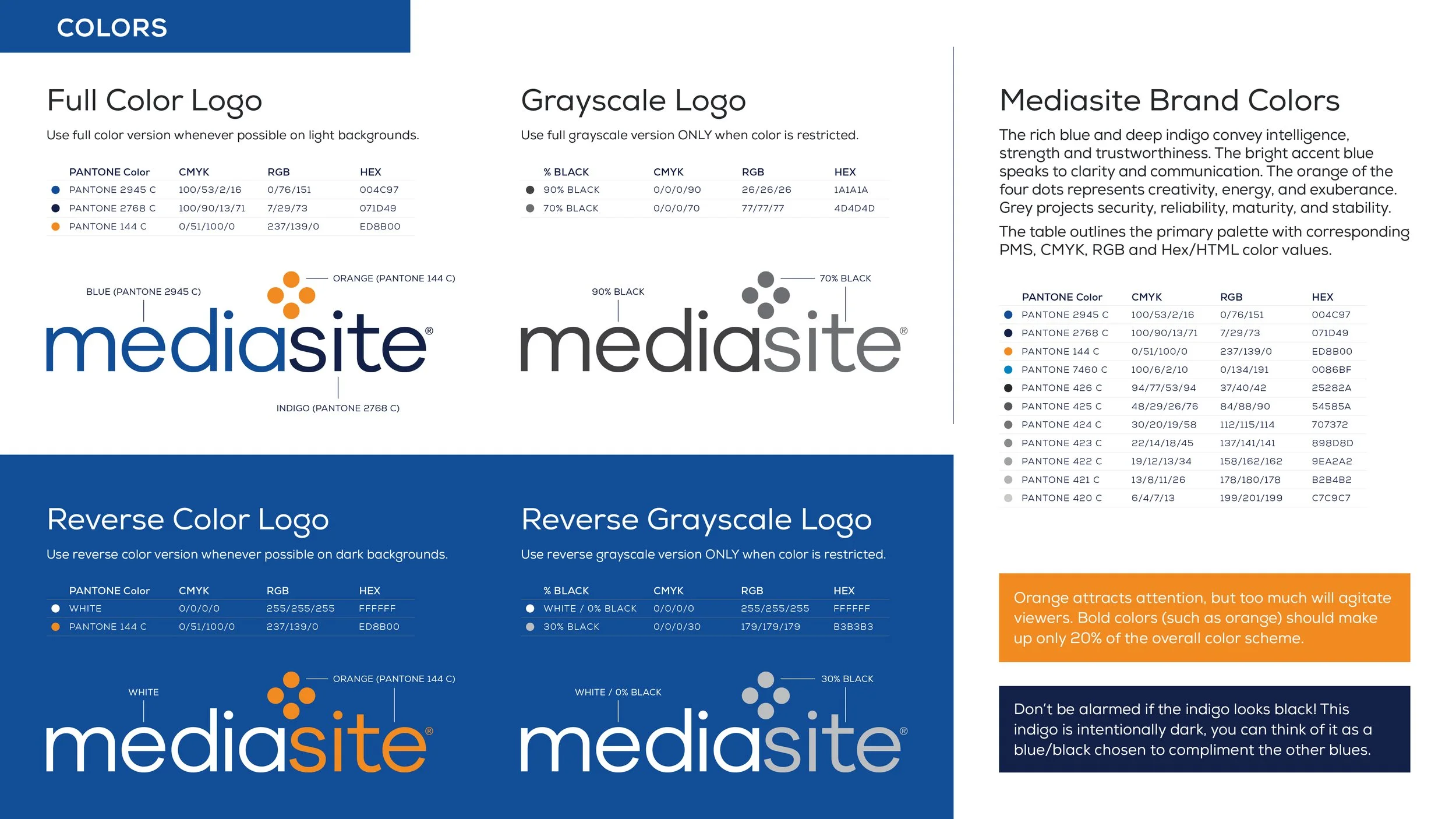
Blue is the most commonly used color in logos for a reason: it encourages brand trust. To create a look for Mediasite, I paired blue and indigo with orange to build contrast, reflecting a balance between technical integrity and new ideas.
The four dots represent a simplified version of the old Mediasite mark. This helped people transition from the old identity to the new and honored the old identity’s figurative interpretation of the film reel. Placed between “media” and “site,” the mark emphasizes the brand’s focus on video and web-based solutions.
-
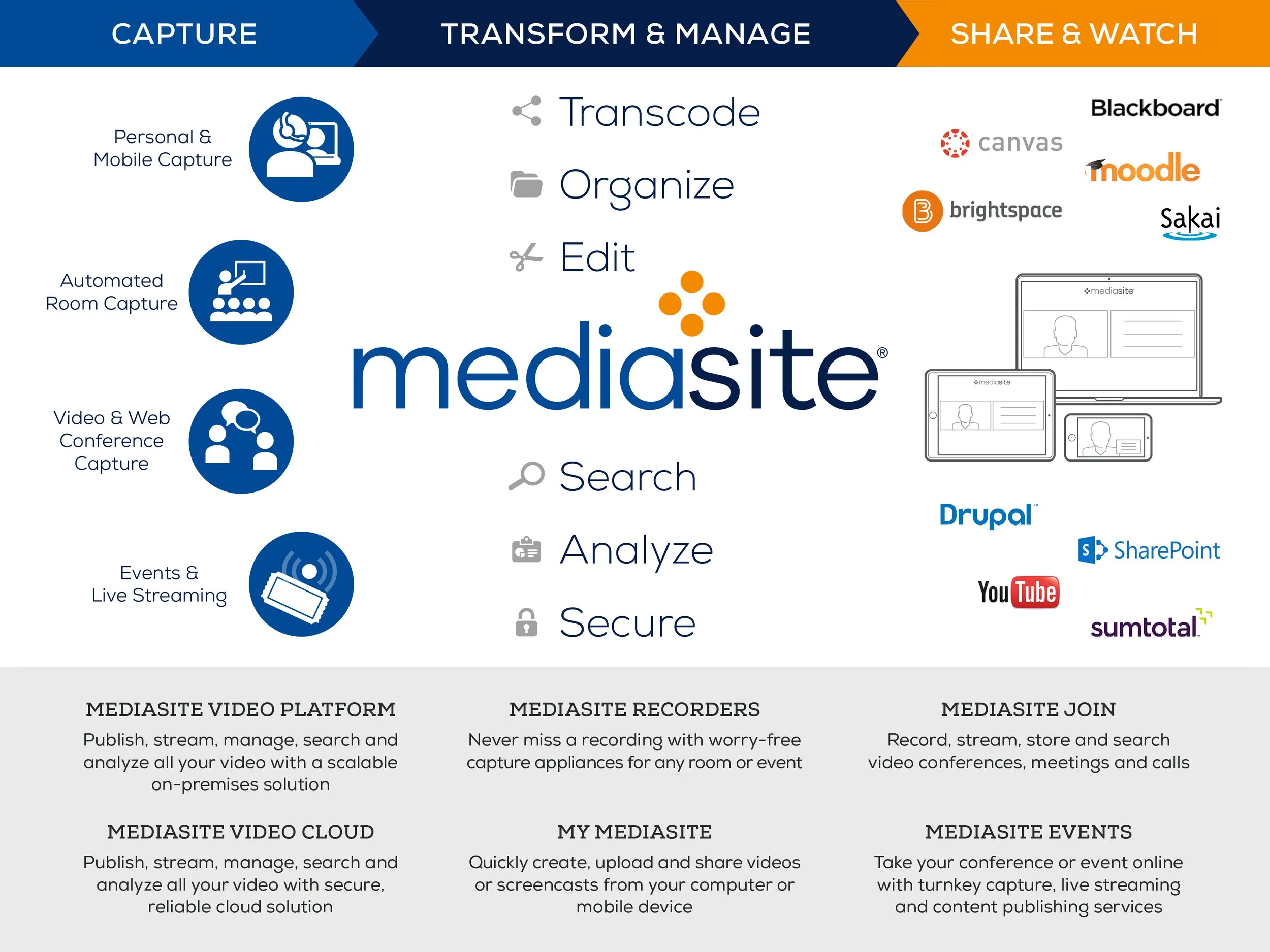
Collaborating with leaders from Marketing, Sales, Product, Engineering, and Customer Service, I reimagined customer-facing communication as visuals. These visuals helped users, from tech-savvy individuals to those less familiar with technology, understand Mediasite's products and services.
While they helped me refine the visuals, I helped them simplify their wording, creating a consistent “brand voice” that united all videos and written communications.
Together, we developed a series of ebooks, product setup guides, brochures, infographics, advertisements, and more. This content was designed to resonate with video capture users and decision-makers in higher education.
-
After speaking with leaders and employees at Sonic Foundry, I observed how the organization was structured and how each leader’s need to protect their space created problems. Listening to the Marketing, Sales, Product, Engineering, and Customer Service teams allowed me to help leaders understand the reasons behind each other’s actions.
I framed this workplace therapy as a collaborative exercise for the rebranding effort. Together, we proposed process changes to break down the territorial issues and came up with new ideas to benefit customers. This low-key approach allowed me to gently guide leaders in developing better behaviors and problem-solving skills.
-
To improve customer understanding of the technology behind Mediasite products and platform, I drew on my early work in instructional design to create 'mental models.'
These were visual diagrams that illustrated how video content flowed through the system and highlighted the connections between hardware, software, and IT infrastructure.

The Lesson: Technology Businesses Need Design Leadership
Rebranding Mediasite brought me closer to a tech environment and highlighted the need for design leadership in technology businesses.
I saw two glaring problems that could be solved through design:
Translating existing tech solutions for consumer understanding — like I did for Sonic Foundry.
Designing new tech solutions for consumer value — like I did for manufactured products earlier in my career as an industrial designer.
After the rebrand, Sonic Foundry offered me a job to lead their design operations. I accepted, seeing both opportunity and a better work-life balance than entrepreneurship. With a four-year-old at home, this was an attractive vision.
Consequently, I closed my agency, sold its assets, assisted with my staff's transition, and referred clients to other agencies.
My break from entrepreneurship lasted only a few months. It wasn’t until I started the job that I realized I hadn’t clearly communicated the role I saw for myself at the company; I had assumed we were aligned after our recent collaboration.
I resigned from the role at Sonic Foundry, but remained determined to bring design leadership into the business of technology.