
Designed to Last
Foresight from Manufacturing to the Enterprise
The Situation
Physical products aren't manufactured the day they're designed. That's one of the first lessons an industrial design student learns: whatever you draw today ships into a world that's already changed, so you learn to look ahead before you pick up your pencil.
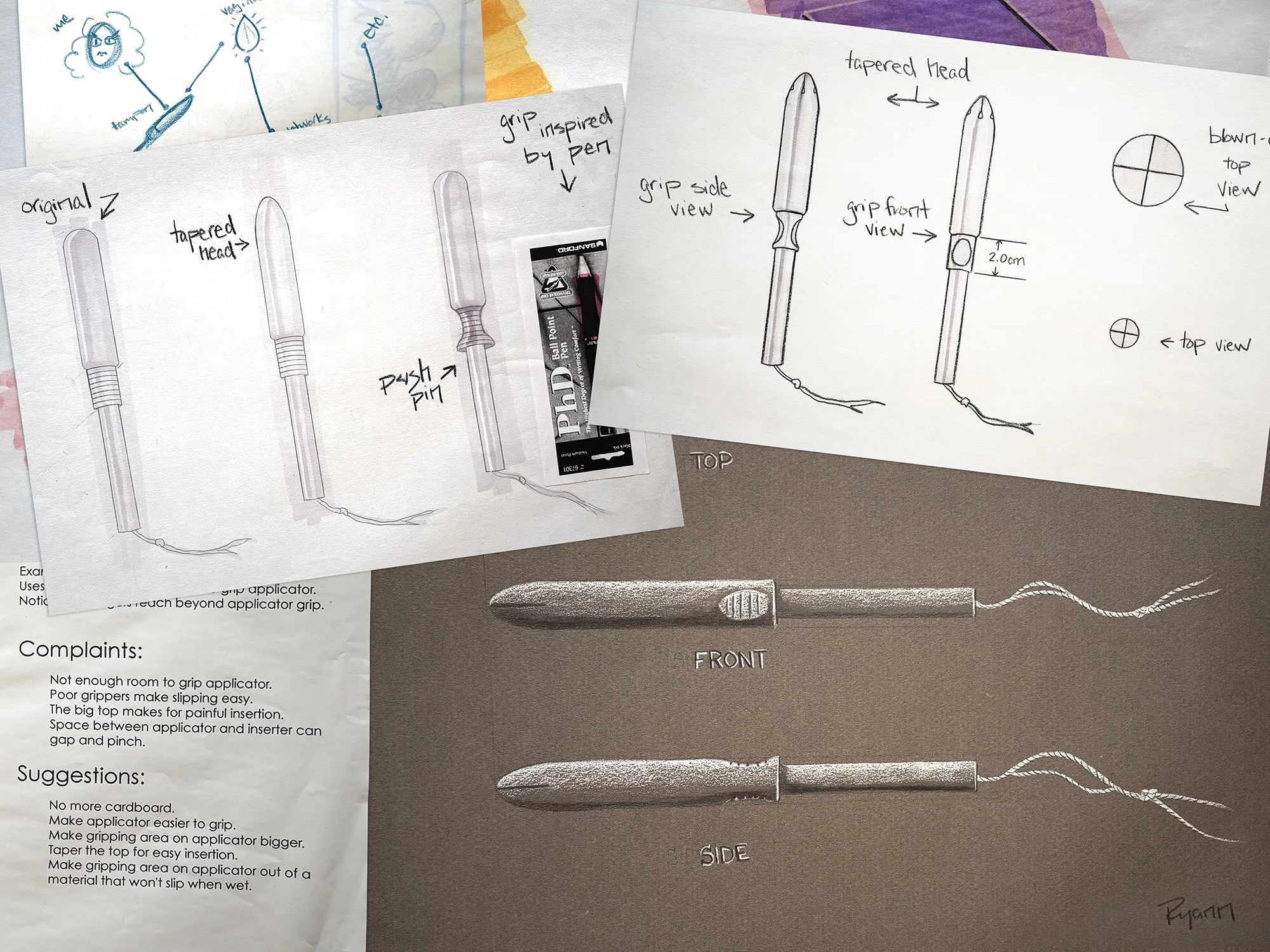
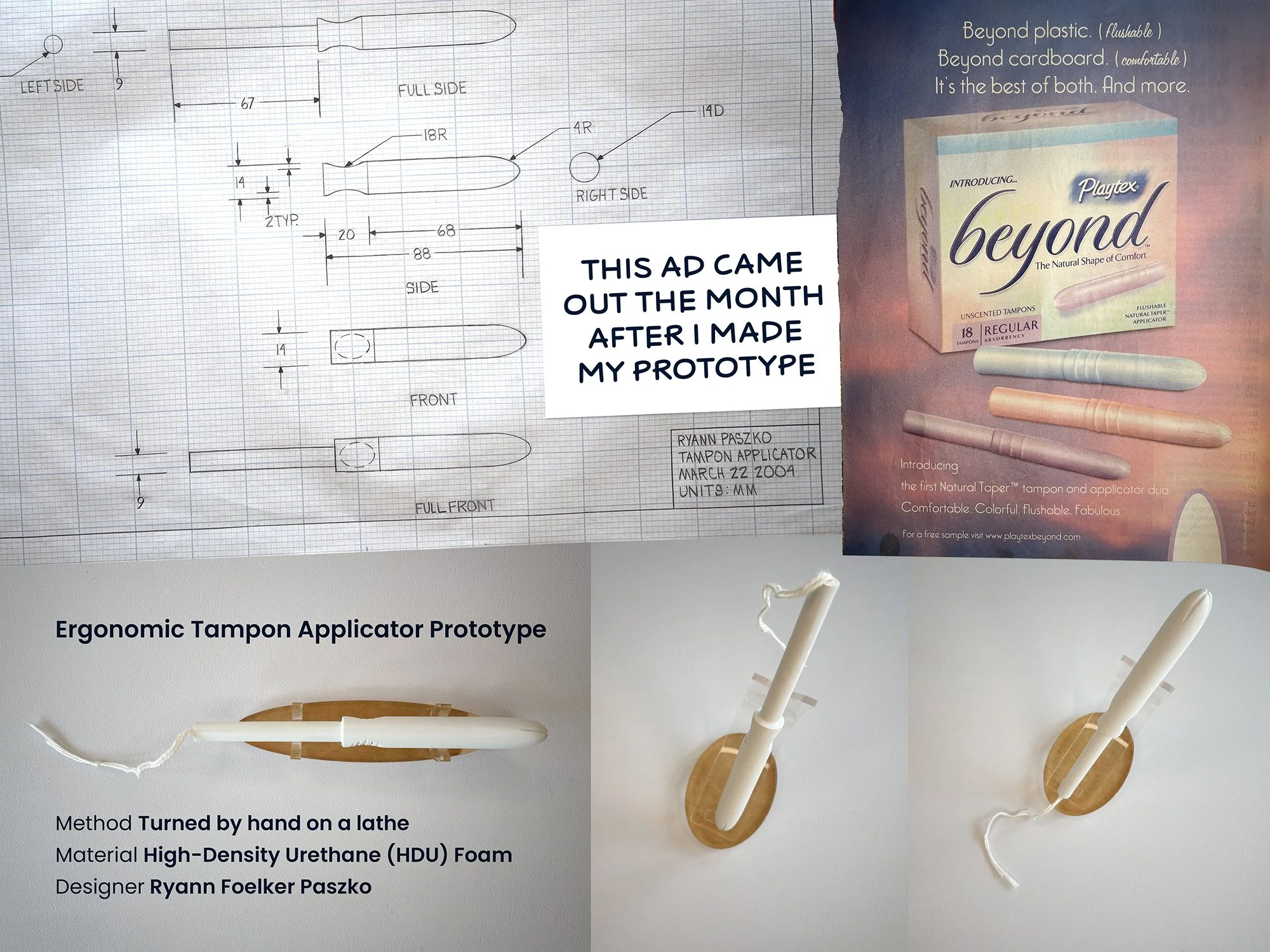
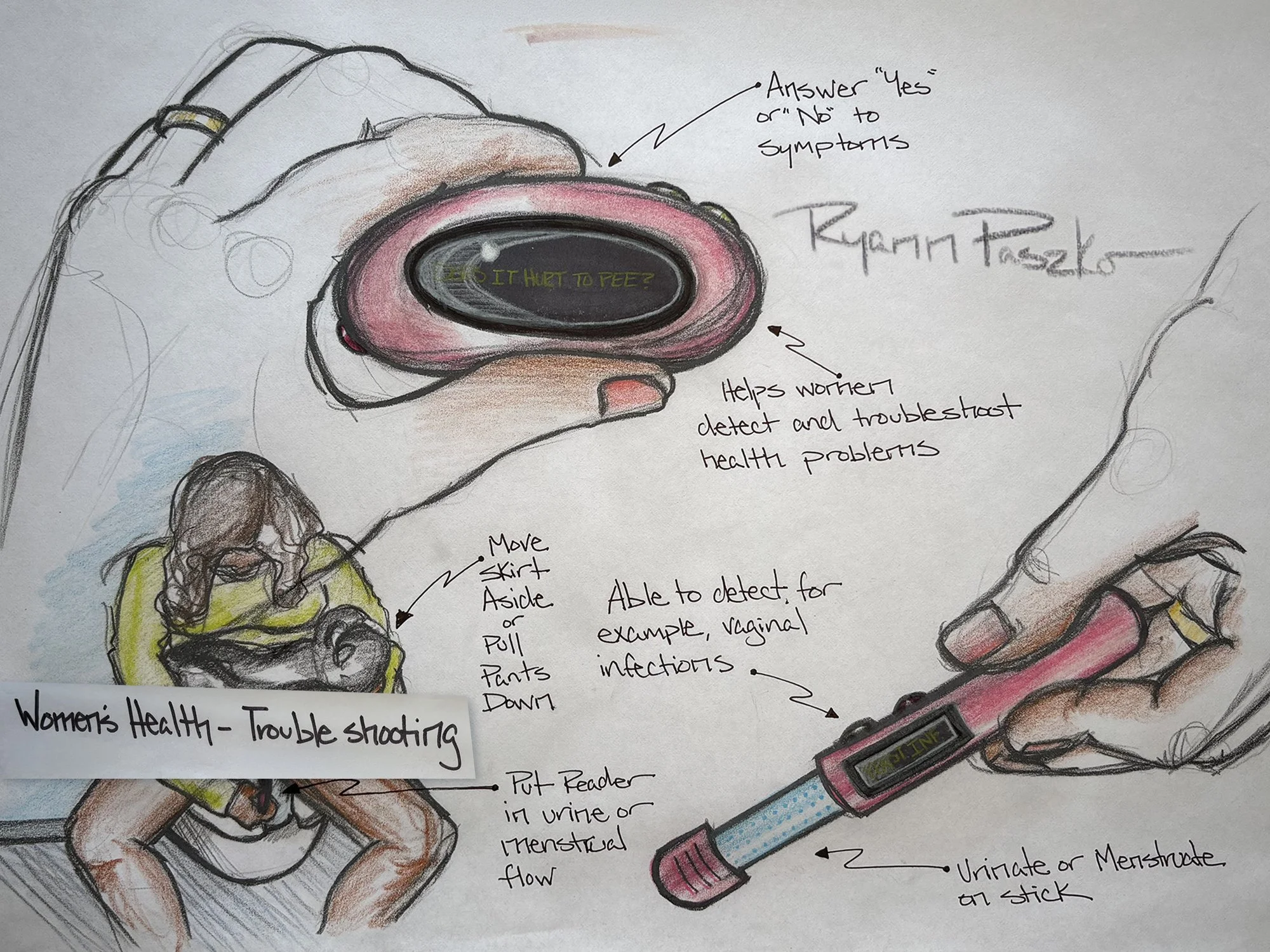
My capstone project in 2006 assessed gaps in the feminine hygiene market and created a suite of new concepts including ergonomic tampon applicators and reproductive health monitors. I also pitched period underwear, a comfortable and convenient reusable alternative to landfill pads, chemical-leaching tampons, and the fussy options in natural health care aisles. Over the next decade, the market caught up. First with 'comfort-grip' tampon applicators, still marketed in 2026, then with at-home infection tests and other reproductive health monitors. In 2013, Thinx proved the financial viability of period underwear.
A leader who judged my class's senior show ran industrial design at Johnson Health Tech and offered me an internship on the spot. Finding and sizing gaps before the market saw them became the work; when they offered me a full-time position, it became the job.
For more than a decade I did that work without a name for it, developing my own frameworks and processes. Then, in 2018, a claims leader at American Family asked for a vision of insurance claims services ten years out, fundable at the board level in four months. To my eye, this was a clear job for industrial design. A claims operation is a product. It ships into a world that's already changed, it has to work for years, and everything the company builds afterward stands on it.
The Method
The claims transformation project was the first time I wrote my method down, because I was teaching a team of insurance professionals to do what industrial designers do: look ahead before picking up a pencil. Together, we created nineteen scenarios, from a small business break-in to a mandatory evacuation to an autonomous-vehicle accident, which gave us a collection of futures wide enough to design against. We put a person in each one, reverse-engineered what the operation would need to deliver the service, and handed the board a picture it could see. That story has its own case study.
Compiling the process notes so the next team could run it, I went looking for how to articulate the part where we refracted today into several tomorrows, and found that it was a named field: strategic foresight. Frameworks, practitioners, decades of work, and a brand-new certification track. I dove deep into the field, adopted the frameworks that improved on mine, and earned my Certified Foresight Practitioner credential from the Global Foresight Advisory Council the next year.
In my practice, foresight is a design input: the futures inspire you to create the next generation of products and services. It’s also a test: you run what you've designed, a product, an operating model, a decision, through each future possibility and see what holds. My practice isn't about predicting the future. It's about understanding where the market might go next and creating the business that will thrive when it arrives.
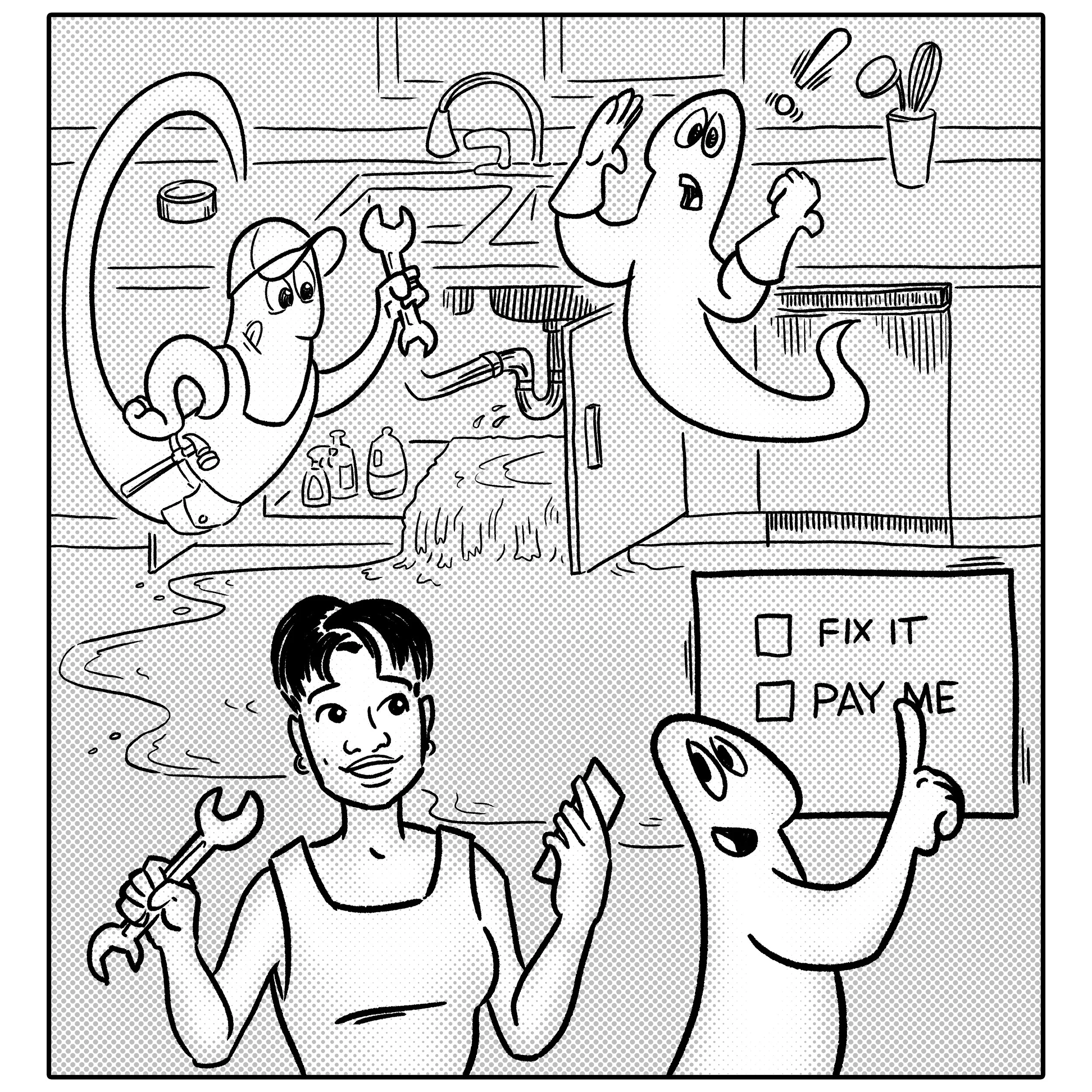
Illustrations of future claims scenarios by Andy Bernier.
The Tension
By 2020, I had a name for the work, a credential, and a board-approved transformation proving its value, but no public-facing example to point to. That left me with two problems:
The claims work was still confidential, inside the company as well as out, so I couldn't validate the approach anywhere it counted.
Company leaders couldn't evaluate the strength of a practice they'd never seen before.
The design practice was mine. I'd brought it to the organization fully formed, and the transformation strategy ran on it. What I wanted was for other leaders to see what I saw: a team of quick studies who had done something exceptional with it.
I went looking for solutions and found one. For the United Nations' seventy-fifth anniversary, its Department of Political and Peacebuilding Affairs and the Design Futures Initiative had put out a global call: scenarios, concepts, and storytelling to inspire the future of peacebuilding. It was the right shape to prove the practice. Peace and digital transformation are both foundations: whatever gets built on top only holds if they do. The deadline was twenty days away.
I took it to my boss, who saw the same opportunity I did: a public example would show decision-makers what the practice could do for technology decisions, and prove that I could take a team new to the method and get world-class work out of them.

“A team-wide grasp of strategic foresight tools means we will be in a better position to meet customers where they are now and where they're going to be in the future.”
— Director of Design Strategy, American Family Insurance, 2020
The Work
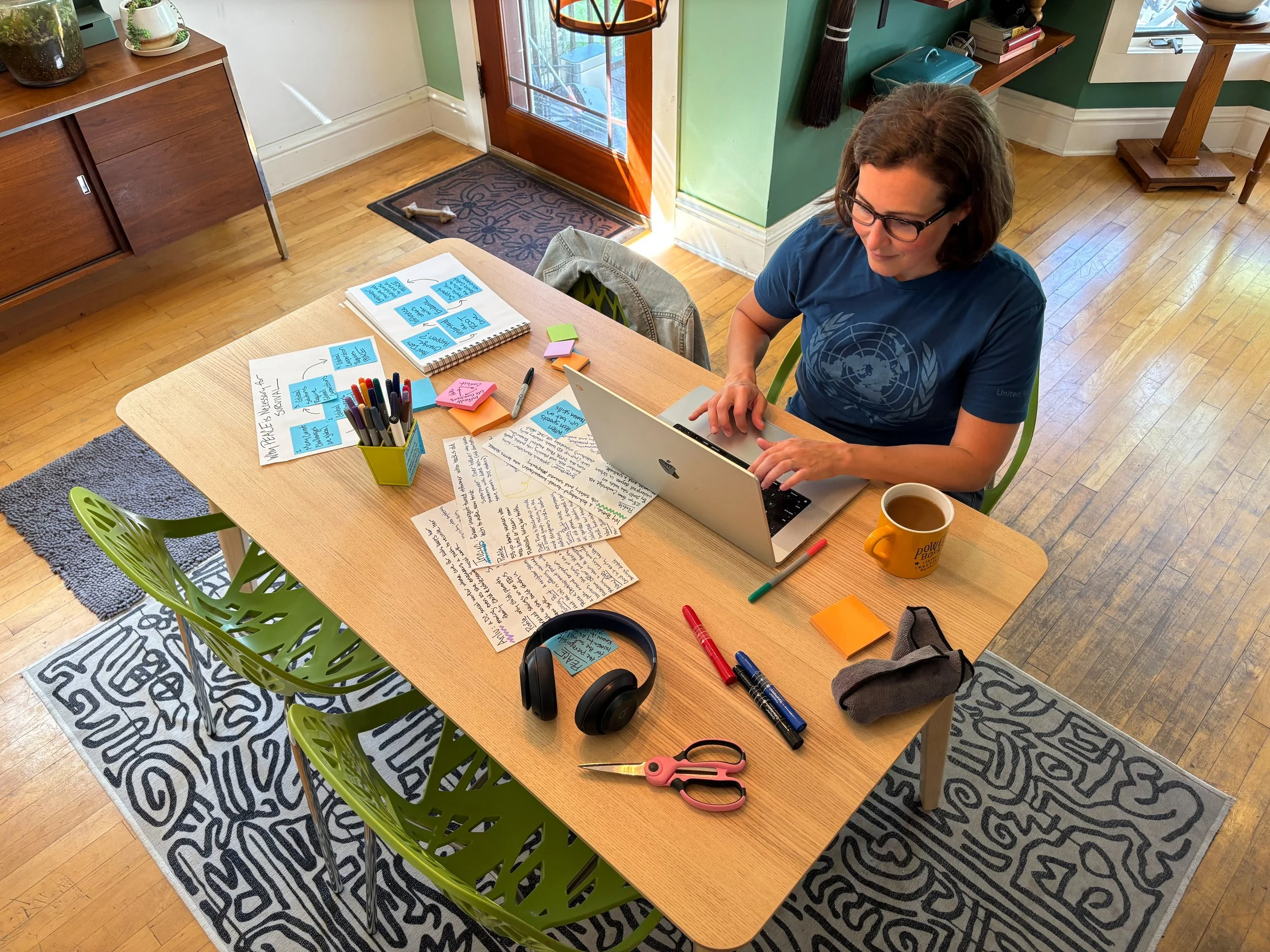
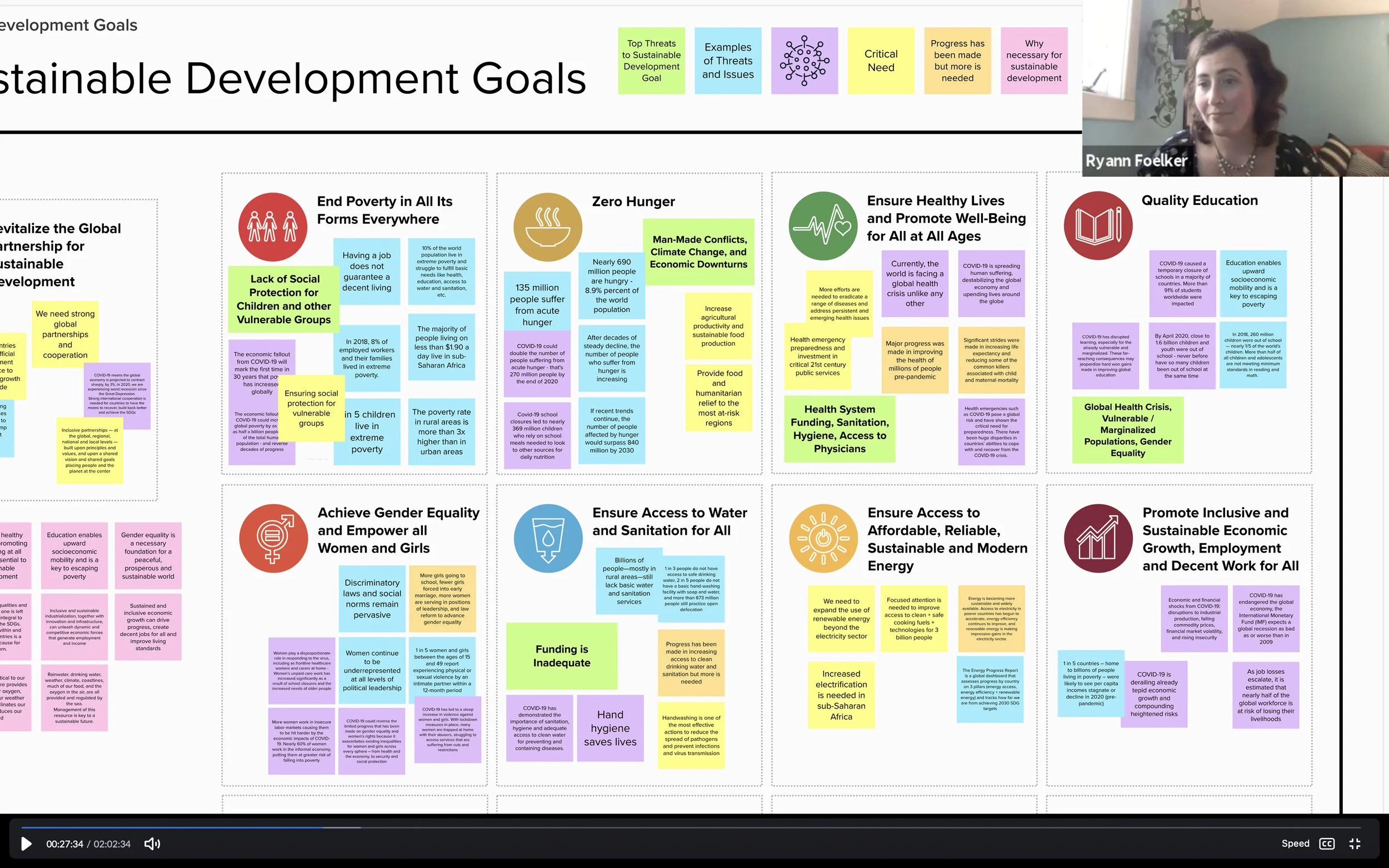
I started recruiting, calling on colleagues who had expressed interest in my work, and thirteen people carved time out of their schedules to follow my lead. Most had never worked together, and many had never touched foresight. I built a choose-your-own-adventure schedule of Zoom workshops and Mural boards, so people could pitch in where their calendars allowed.
Together we framed the question our work would answer: how might the United Nations assist with peacebuilding in post-conflict societies in the year 2040?
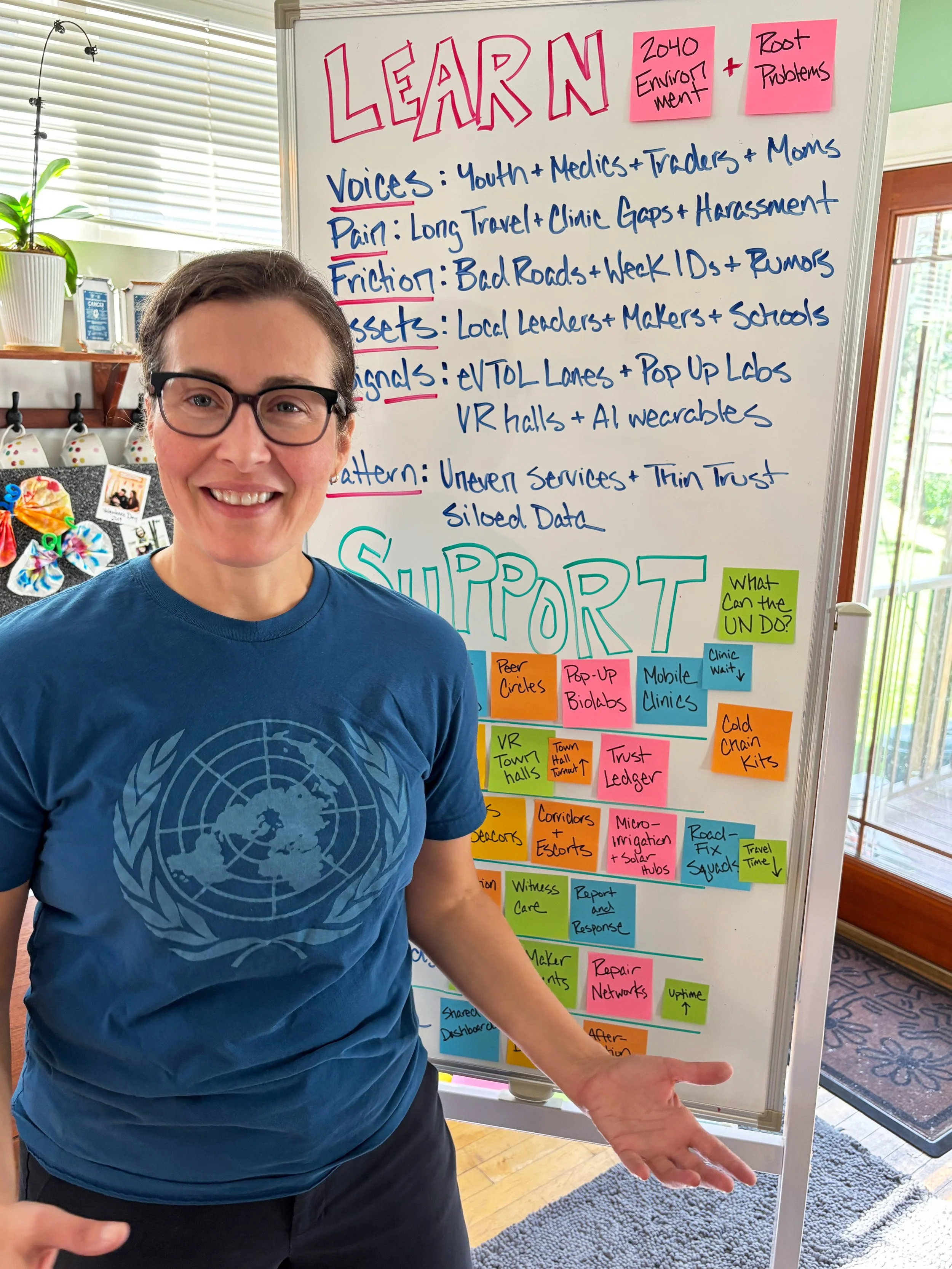
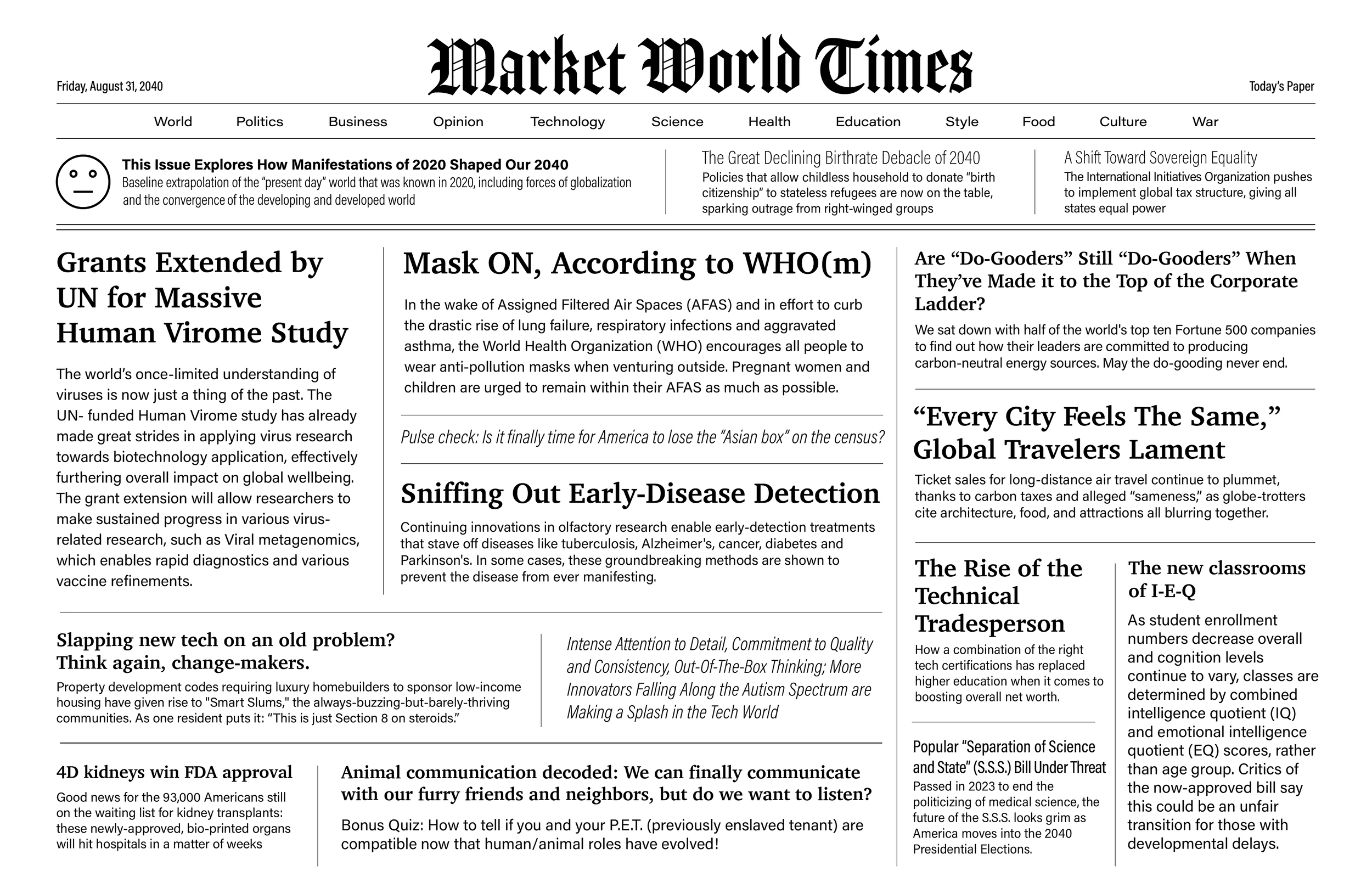
None of us were experts in peacebuilding, so we dug into prevention, mediation, and rebuilding, delighting in every parallel we found with insurance. I taught the tools as we used them, building three future scenarios, including a baseline projection of 2020's trends and one from either end of the spectrum of possibilities. We wrote each as a set of post-conflict news headlines from 2040. For each scenario, we imagined a day in the life of a person engaged in peacebuilding. Ivy Teresa, for instance, a newly minted UN peace and development adviser on her first field mission.
Their daily lives allowed us to envision what peacebuilders would need in a world that was twenty years older than the one we knew. Like the outline of a book that gives shape to a story, each exercise built on the one before until we had the scaffolding we needed to answer the question.
Four of us did the heavy lifting on nights and weekends: Alex Cummings and Pandian Chandra from Savannah, Urba Mandrekar from Goa, and me from Madison. We split responsibilities, made quick check-ins regular, and challenged each other to edit hard. Others contributed during our two working sessions and left notes on the project board.
The final step was using the scaffolding to create peacebuilding concepts for the future. With the deadline in view, we kept it to a structured brainstorm around concrete tools and services, the kind leaders could fund now with confidence they’d hold up later.
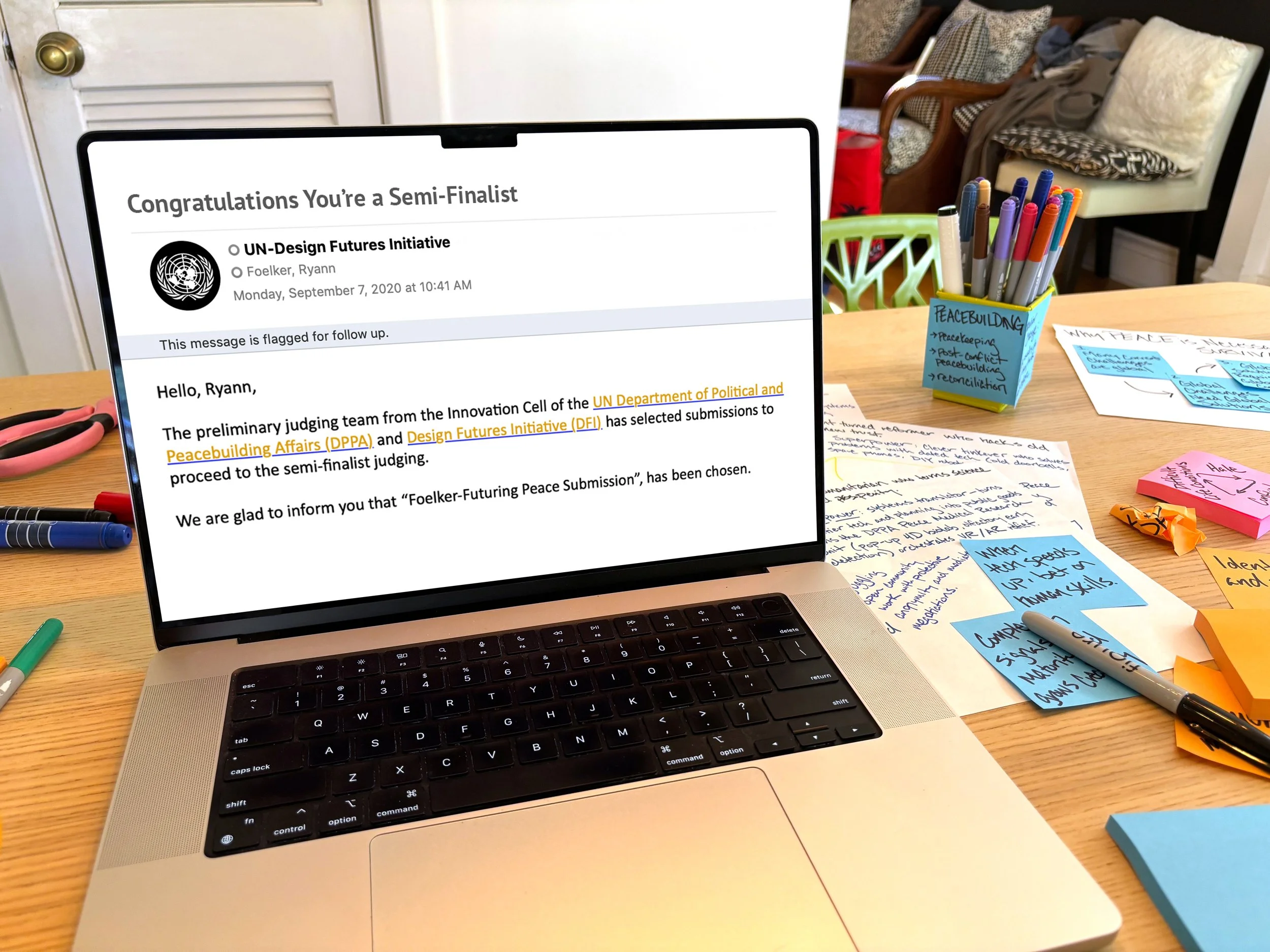
We sent it in on day twenty, before we'd agreed on a name. The UN's congratulations email is addressed to "Foelker-Futuring Peace Submission." We called it Peace and Risk: 2040 Stories of Recovery after the fact.
The Results
A place in the global conversation
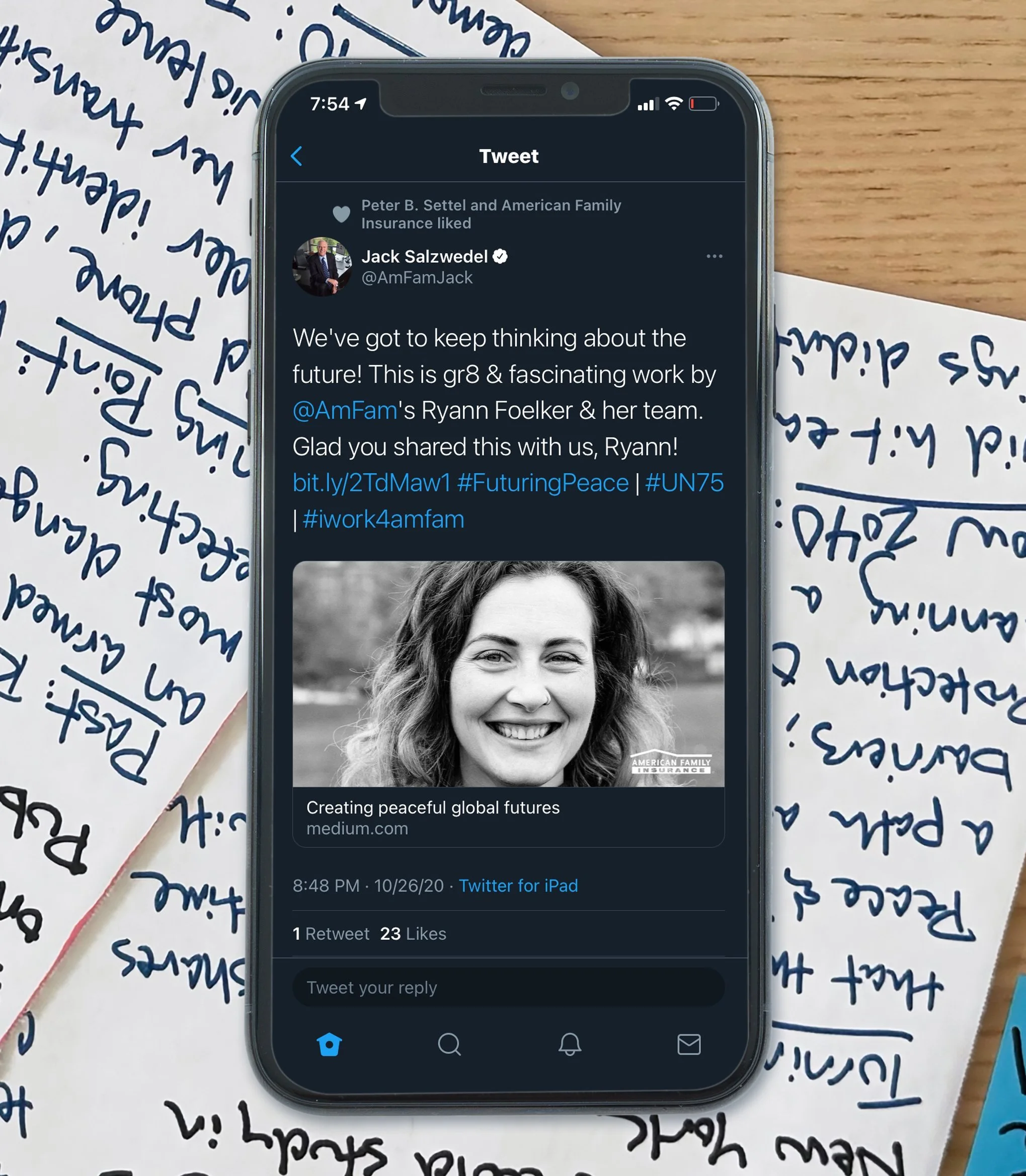
The judges from the UN DPPA Innovation Cell and the Design Futures Initiative named Peace and Risk: 2040 Stories of Recovery a semi-finalist. American Family published my account of the project on Medium that October, and the CEO shared it.
A school that taught 66 people to look ahead
The project proved something I'd suspected since the claims work: people with deep domain knowledge and no design training could learn to look ahead with guidance and a few tools. The next year I built Future Tuesdays, a design school inside the claims organization that taught design and foresight on live business problems. It trained 66 adjusters, underwriters, treasury analysts, and interns. Graduates taught the cohorts after them.
The first cohort's work fed the co-innovation fund American Family and AWS announced at re:Invent in 2022, and the programs I originated earned the company the No. 71 spot on Fast Company's 2023 Best Workplaces for Innovators; making it the first insurance carrier to place.
A leadership role with foresight in its remit
In 2021 the Chief Claims Officer created a director role around my skill set, with a remit for design and foresight. I was the company's most senior design leader and its only foresight leader.
I led more than a dozen scenario projects: the nineteen claims scenarios behind the platform vision, and three- and four-scenario sets for projects and executive teams. The most mature example was a collection of fourteen opportunities built to complement the company's three-year strategic plan. My team scored each one on a trust-and-value metric I'd created for a public talk and lent to the company, since its mission was to be the most trusted and valued carrier, and handed the set to executives to inform roadmap and partnership decisions.
The toolkit travels
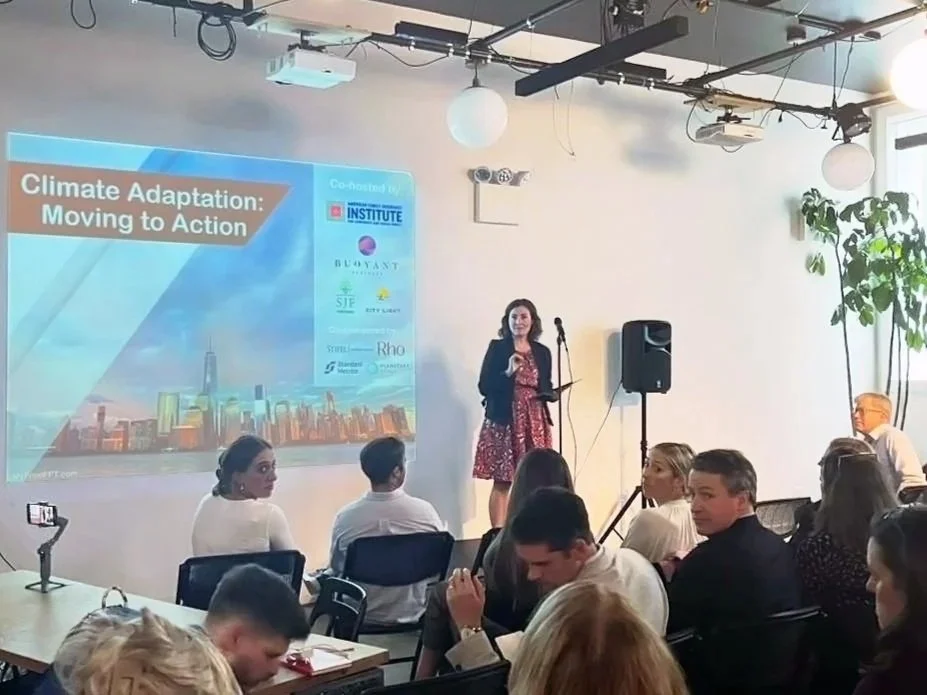
In September 2025, five years after the UN project, I brought my practice to the stage at Climate Week NYC, for climate adaptation instead of peacebuilding. I broke it down into three parts: 1. Frame a human problem. 2. Test solutions across future possibilities. 3. Translate foresight into products: what to measure, who owns what, what must be true first, second, and third. The toolkit works because it was never about peace, policy, or claims operations. It's for designing products that hold when the world doesn't.
Why It Worked
The practice existed before the name. Twenty years of designing things that ship into a changed world taught me to look ahead first, and by the time I found the field of strategic foresight, I had a working practice to bring to it, plus the humility to adopt what the field did better.
Scenarios are scaffolding. Foresight projects fail when they end with scenarios. Authors don’t send out their outline; they use it to write a book. Our scenarios ended as product concepts, market opportunities, and decisions a leader could fund, kill, or put on a roadmap. They also served as tests for whether the ideas we developed would hold across a spectrum of possible futures.
And I developed people and projects at the same time. The UN sprint, the claims transformation, and Future Tuesdays were all the same move: a real problem, a team new to the practice, and a project deadline. That's how a practice outgrows the person who started it.
This case study reflects work I was proud to contribute to at American Family Insurance. The content shared here is based on initiatives that were made public under executive direction and have been featured in industry presentations and publications since 2020, including American Family's Medium publication, Fast Company's Best Workplaces for Innovators, and Climate Week NYC. All views expressed are my own. No confidential or proprietary information is disclosed, only publicly available outcomes, personal insights, and individual learnings.