
Co-Creating With Competitors
The Industry Lab That Turned Vendors Into Partners
The Situation
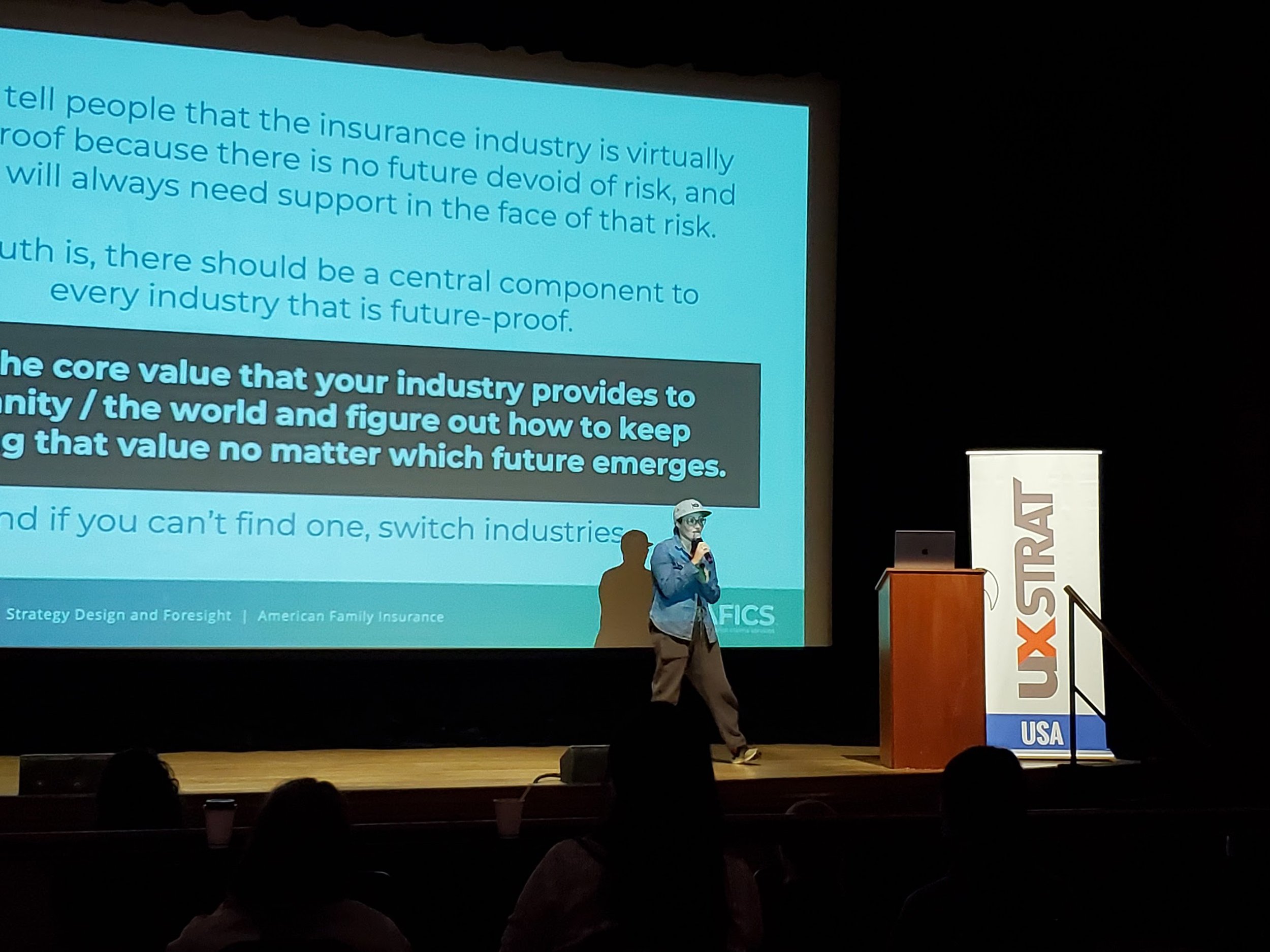
American Family’s claims company knew where it wanted to go, and it had already found nearly every product on the market that fit its vision. The missing pieces didn’t exist yet, so we weren’t going to get them from a vendor pitch.
The transformation plan accounted for that gap. Our chief claims officer had laid out the company’s path in three steps: decide what claims should become, find the technology companies already building pieces of it, then co-create the rest with them. He had asked me to design the first step three years earlier, and I had designed the evaluation framework behind the second. For the third, he called on me again.
That meant building strategic partnerships with companies that wanted to move and had strengths and resources we didn’t. Vendors usually tell you which of your problems their product solves, and that keeps you stuck on small fixes when you’re targeting a completely new way of working. So I designed the lab to run backward from a sales call: customer problems first, business impact next, products last.
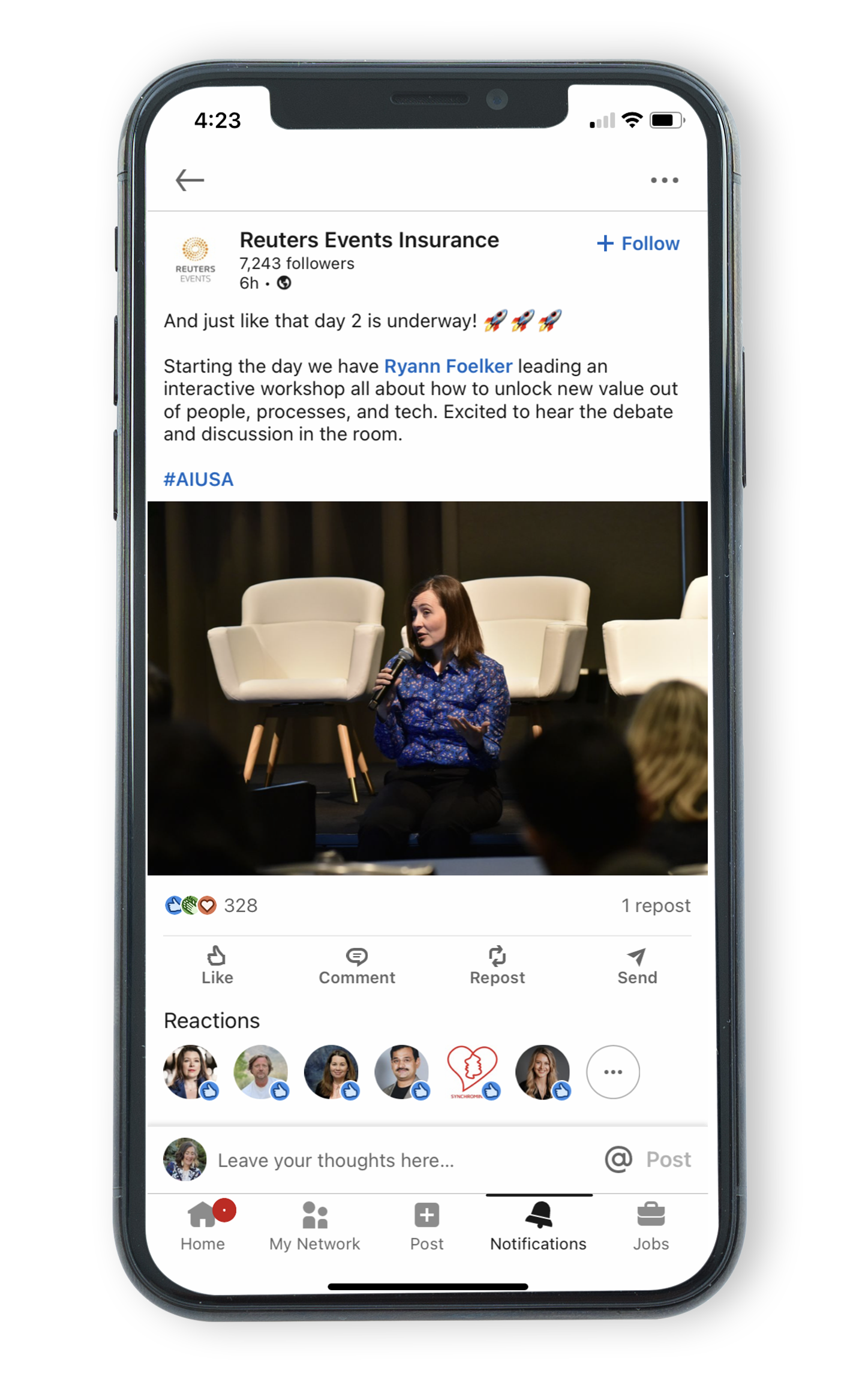
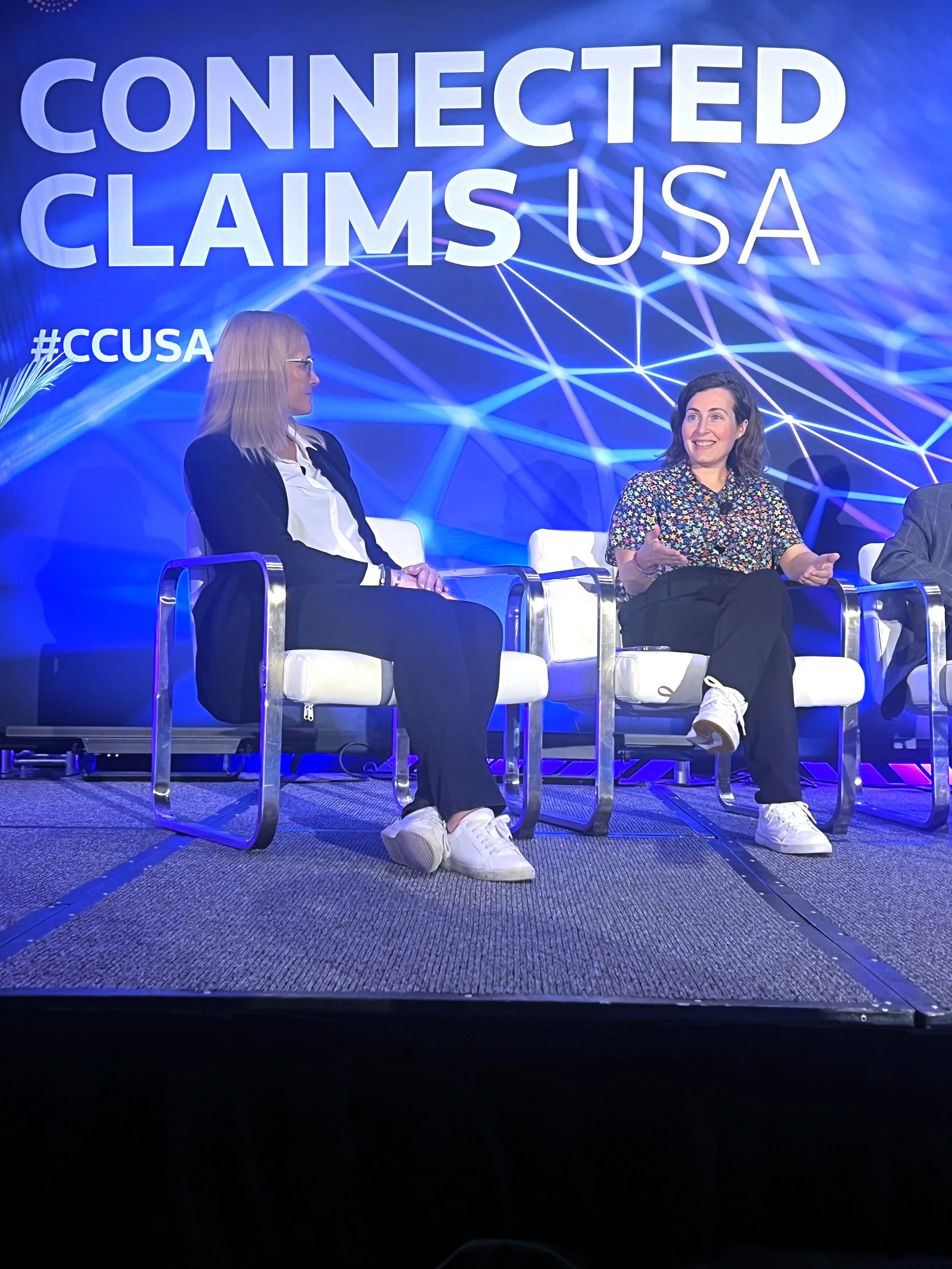
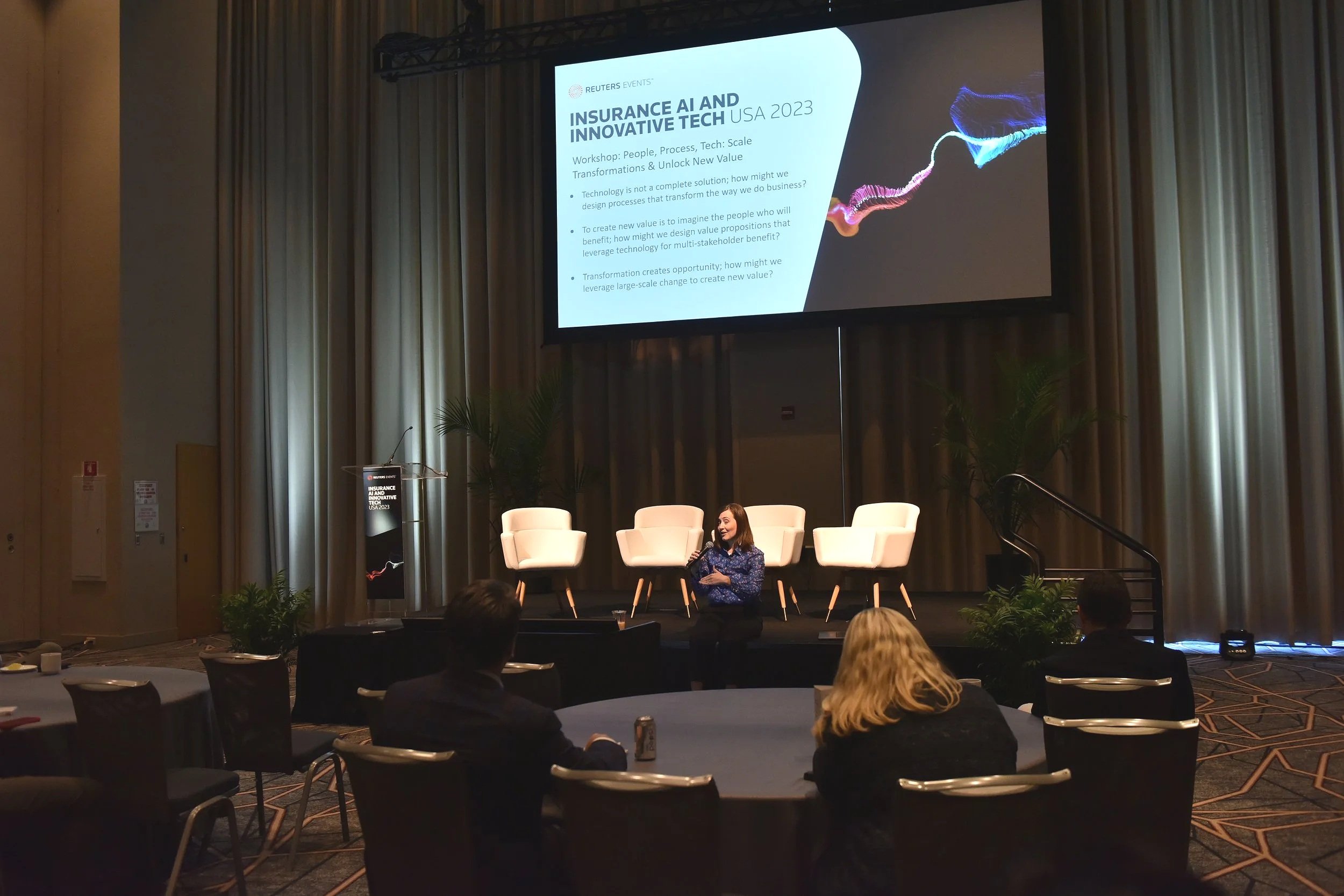
“The challenge isn’t just operational, it’s philosophical. We have to move from optimizing what exists to designing for what’s coming.”
— Ryann Foelker, Insurance AI and Innovative Tech Conference 2023
The Tension
We pointed our first co-creation at auto claims: how could we make vehicle damage happen less, and suck less when it did happen? And the more interesting question: how could vehicle damage become the gateway to something good? Too many people think of value as reduced friction and overlook added benefits.
My team recruited 35 leaders from 12 companies through our own contacts: someone who knew someone at Tractable, someone who knew someone at Caliber Collision. Our list included sales and client VPs, heads of product, a head of claims, a chief client officer. Between them, they covered salvage and total loss, AI subrogation, first notice of loss, rental, glass, core systems, and payments. And our ask was big. Give us five days: two two-day sessions and a one-day share-out. Share your company’s strengths and resources openly, with competitors in the room and no NDAs. And come ready to learn a design approach to product innovation.
Each knew their company’s part of the claim deeply and knew how to sell into it. The lab asked them to design across the whole, alongside competitors, in a method new to most of them.
The no-NDA part raised more than a few questions, and for good reason. Sharing openly meant showing their hand to a rival. And I had no authority to make anyone do it. The lab had to run on influence.
What I had was something they wanted: a look at what American Family was targeting next, and the approach to value creation behind it. Leading with value they could feel got them in the room for day one.
Their leaders weren’t in the room because we didn’t know them yet. The lab had to earn introductions to each partner’s leadership team and connect them with our chief claims officer. That meant I had to design the lab so every participant left wanting to be the one who brought their executive into the next stage of our transformation.
And half the room was on a screen. I didn’t want to lose a company over a scheduling conflict that kept a leader from traveling, so we ran the lab hybrid. Then the room we had for the in-person group couldn’t support a stream. So I built two schedules. I taught the in-person group, left them working with the facilitators, ran to a connected room on the same floor, and taught the same lesson to the virtual group, in a loop, two days at a time.
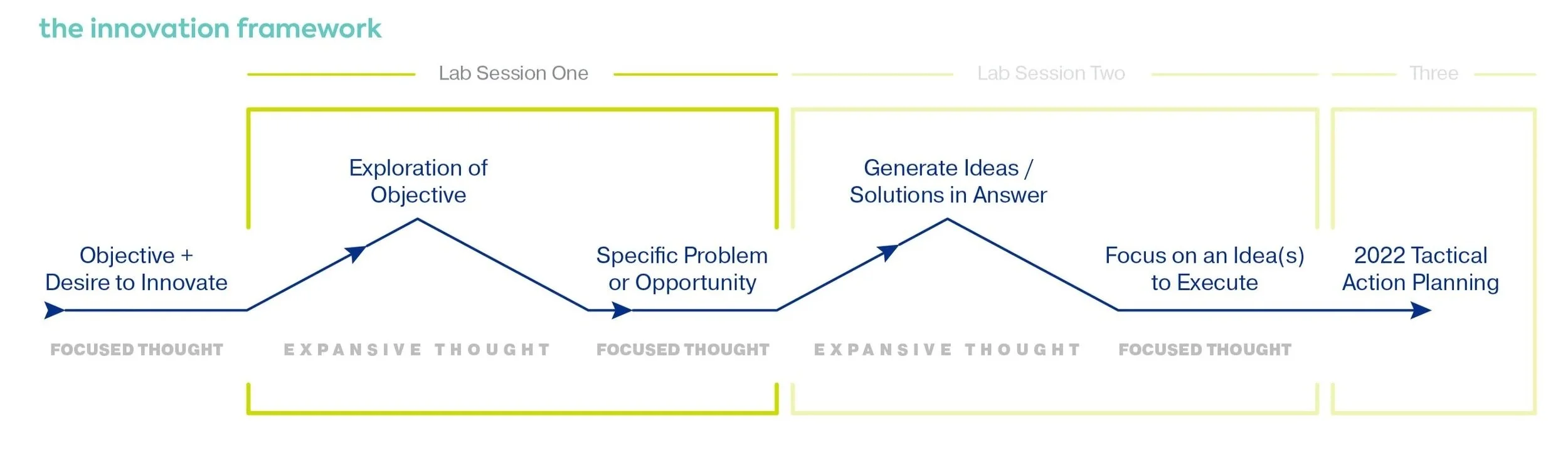
The innovation framework. I drew this visual, and my team sent it to potential participants across the industry so they could see all three sessions before signing up.
The Work
I designed the lab from start to finish on the design process I learned in school, the one the double diamond later put a name to.
Then I drew it as the innovation framework above: one straight path with arrows that walked participants through the lab’s three sessions and showed them where their thinking would expand and where it would narrow. Everyone could see the plan without feeling intimidated.
Even the name did some of the work: we called it an industry innovation lab because the point was to make the industry better together, and that mattered more than secrecy.
-
I opened by teaching the design process and Bain’s 30 Elements of Consumer Value: types of value that run from saving someone time to making them feel something to changing how they see themself. No one in my lab was going to fixate on reducing friction without considering more meaningful ways to make life better.
-
I drew a customer value map that laid out the end-to-end customer journey of a claim, from preconceptions about vehicle damage and insurance all the way through life after the vehicle is fixed or replaced. I split it into three zones covering what the customer sees and what happens behind the scenes. I kept it high level on purpose: a reminder of the goal and a push toward bigger thinking.
Then I split participants into groups, putting competitors side by side and sprinkling in American Family team members who knew my approach, and ran an ideation session that rotated each group through every zone. With the whole customer journey in front of them, nobody could stay parked in the one section they felt they owned, and nobody could settle for a tiny improvement inside it. The question changed from "What does Tractable have? What does American Family have?" to "What do we all have, as an industry, that could reimagine this whole customer experience?"
The next day, I taught additive brainstorming, pushing participants to challenge current-state assumptions and reimagine further.
-
As a group, we narrowed only at the highest level: a discussion of “ah-ha moments” and a quick dot vote on the opportunities my facilitators and I had gathered. The real narrowing happened behind the scenes. Between sessions, my team and I made the calls: four design principles, two opportunity areas, four problem statements, and a set of ideas worth developing. The group came back to clear choices and ideas to work from. One problem statement asked them how they could treat “both our partners and our competitors as valued allies.”
-
Formal names matter less than words that carry the meaning. Most people heard “idea” and pictured a finished solution. I started calling them seeds, a word that made it clear ideas need nurturing before they grow into products. For this lab, I created the Seed Development Framework to help each participant grow concepts from the ideas we generated together.
I brought in external perspectives, too: five tools from design and business strategy practice: negative brainstorming, point-of-view brainstorming, ecosystem mapping, the value proposition canvas, and the Business Model Canvas. I taught each one, and participants picked the approach that made sense to them.
-
Session three was the share-out. Ten of the 12 companies presented concepts for co-creation: nine value propositions in all, because two companies built theirs together. Every one was feasible, desirable, and served American Family’s vision. One of my team members created the Value Alignment Rating under my guidance. It scored each pitch on disruptive thinking, tangible customer value, and the strength of its value proposition. The rating went into the summary deck their leaders saw later, so executives on both sides could gauge the value co-development could create.
This was a co-creation lab, not a hackathon. Picking favorites in front of competitors would have burned the introductions the lab existed to earn, so we thanked every company for building something new with us and moved forward with each one separately. Two companies chose not to pitch, and we respected that. Co-creating takes more time and work than pitching something already built.
-
This lab was the first assignment for my newly formed design strategy team. Two direct reports rode shotgun while I designed it, and four people from my peers’ teams joined them as facilitators. All four later joined my team.
The Results
Introductions the lab was designed to earn
Because of the lab, ten companies introduced their senior executives to our chief claims officer. Every one of those conversations started pre-seeded with co-development concepts built to serve American Family’s vision for the future of claims.
Two concepts that went further
In July 2022, American Family announced a partnership with Tractable to bring its AI to auto subrogation and said it stemmed from the lab. The other company asked to keep co-creating with a larger group of its people, so that work became a project on my team.
A format that became the standard
The lab was the claims company’s first of its kind, and the workshop design and facilitation format I created became the standard for every partner lab and co-creation session after it. I brought the same process to AI partner sessions a few years later, presenting opportunities to reimagine how insurance works to executives at major technology platforms and finding where they wanted to co-create.
People who could run it next
The six people who facilitated the lab with me went on to design and run partner co-creation sessions themselves. Two of them led the follow-up sessions with the second company’s larger team. Another led a lab with a major automaker’s connected-vehicle service.
Why It Worked
We started with a different question. Instead of “What can you sell us?” we asked “What do we all have, as an industry, that could reimagine this whole experience?”
Then I designed the lab to make that question safe to answer: no NDAs, competitors side by side, a method taught before every ask, and no favorites. The introductions followed, because every participant left with something worth showing their executives.

Draw What the Room Needs
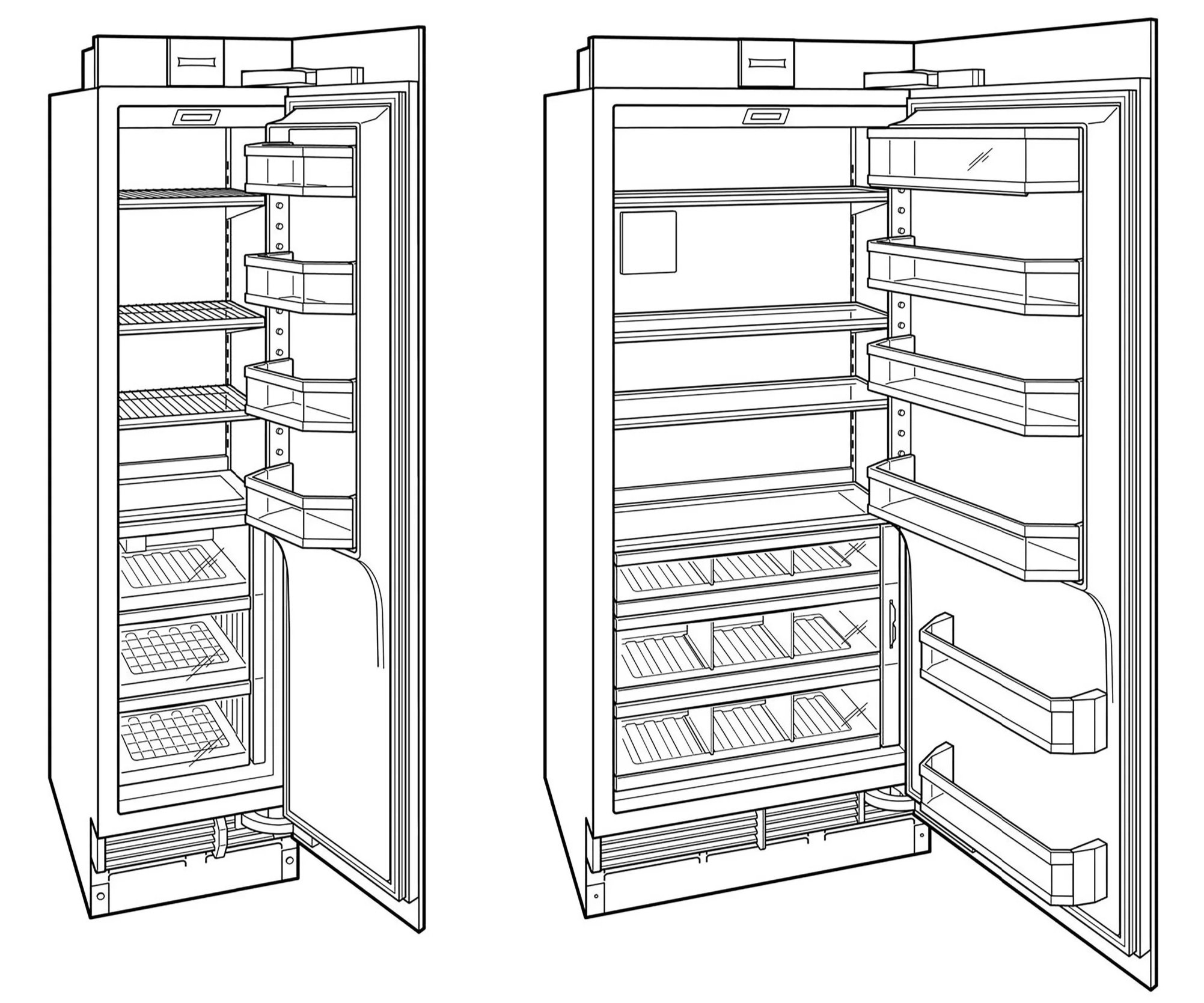
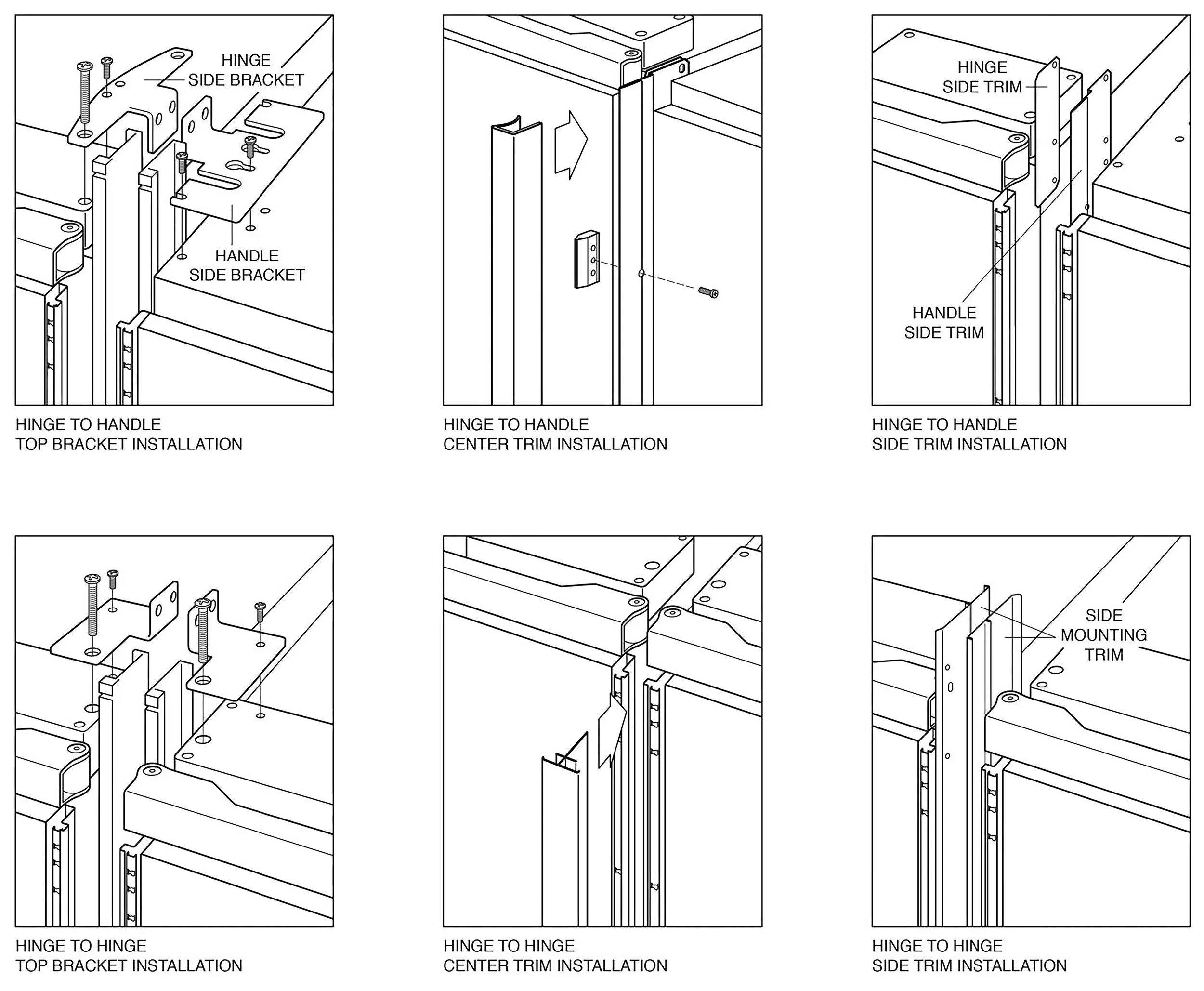
I started my career drawing products and components for manufacturers. Some drawings showed the whole product assembled and beautiful, the way a customer pictures it at home. Others showed exploded views to guide installers as they worked. One product, several ways of looking at it.
That’s how I explain a complex system: I show the parts that matter for what the room needs to do. A room of competitors, a board, a team of engineers. Each one needs its own view.
This case study reflects work I was proud to contribute to at American Family Insurance. The content shared here is based on initiatives that were made public under executive direction and have been featured in industry presentations and publications since 2021. All views expressed are my own. No confidential or proprietary information is disclosed, only publicly available outcomes, personal insights, and individual learnings.